
Chinese Journal of Magnetic Resonance ›› 2026, Vol. 43 ›› Issue (2): 200-213.doi: 10.11938/cjmr20253181cstr: 32225.14.cjmr20253181
• Articles • Previous Articles Next Articles
LI Ruiyi1,2, LI Sha1,2, XU Qiuyi1,2, SUI Meiju1,2, CHEN Shizhen1,2,3,*( )
)
Received:2025-09-19
Published:2026-06-05
Online:2025-10-22
Contact:
CHEN Shizhen
E-mail:chenshizhen@apm.ac.cn
CLC Number:
LI Ruiyi, LI Sha, XU Qiuyi, SUI Meiju, CHEN Shizhen. In Situ Regulation of Protein Corona for Enhanced Tumor-targeted 19F MRI and Combined Therapy[J]. Chinese Journal of Magnetic Resonance, 2026, 43(2): 200-213.
Add to citation manager EndNote|Reference Manager|ProCite|BibTeX|RefWorks
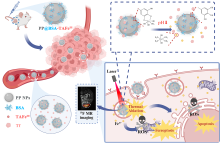
Fig. 1
Illustration to demonstrate the structure and mechanism of PP@BSA-TAFeⅢ NPs
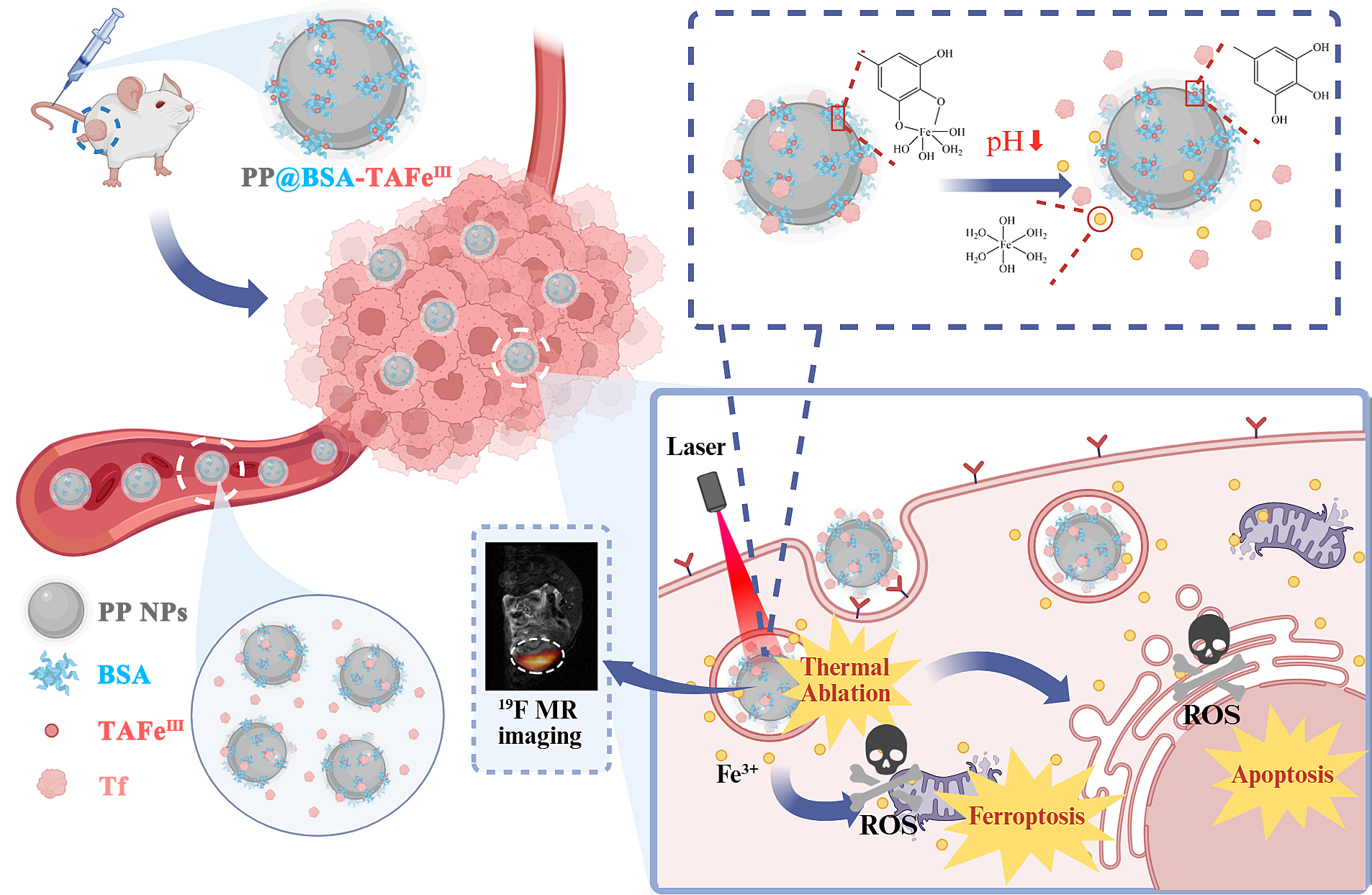

Table 1
Experimental reagents and materials
| 试剂/材料名称 | 生产厂商 | 规格 |
|---|---|---|
| 十二水合磷酸氢二钠 | 中国医药集团有限公司 | 500 g |
| 二水合磷酸二氢钠 | 中国医药集团有限公司 | 500 g |
| 二氯甲烷 | 国药集团化学试剂有限公司 | 500 mL |
| 甲醇 | 国药集团化学试剂有限公司 | 500 mL |
| 单宁酸(TA) | 西格玛奥德里奇贸易有限公司 | 100 g |
| 聚乙烯醇(PVA) | 西格玛奥德里奇贸易有限公司 | 250 g |
| 罗丹明B | 西格玛奥德里奇贸易有限公司 | 25 g |
| 牛血清白蛋白(BSA) | 阿达玛斯生命科学试剂有限公司 | 100 g |
| 全氟-15-冠-5-醚(PFCE) | 阿达玛斯试剂有限公司 | 1 g |
| 六水合三氯化铁 | 上海阿拉丁生化科技股份有限公司 | 500 g |
| 聚(D,L-乳酸-co-乙醇酸)(PLGA) | 上海阿拉丁生化科技股份有限公司 | 5 g |
| Calcein AM/PI细胞活性与细胞毒性检测试剂盒 | 上海碧云天生物技术股份有限公司 | 500 T |
| 苏木精&伊红(H&E)染色试剂盒 | 上海碧云天生物技术股份有限公司 | 200 T |
| TUNEL细胞凋亡检测试剂盒(绿色荧光) | 上海碧云天生物技术股份有限公司 | 20 T |
| 4',6-二脒基-2-苯基吲哚(DAPI)染色液 | 上海碧云天生物技术股份有限公司 | 10 mL |
| 细胞计数试剂盒-8(CCK-8) | 上海碧云天生物技术股份有限公司 | 2500 T |
| 异硫氰酸荧光素(FITC)标记鬼笔环肽 | 北京索莱宝科技有限公司 | 300 T |
| 2',7'-二氯荧光素二乙酸酯(DCFH-DA) | 北京索莱宝科技有限公司 | 25 mg |
| 无菌PBS | HyClone | 500 mL |
| RPMI 1640基础培养基 | Gibco Life Sciences | 500 mL |
| 青霉素-链霉素溶液 | Gibco Life Sciences | 100 mL |
| 胰蛋白酶 | Gibco Life Sciences | 100 mL |
| TRF ELISA检测试剂盒 | 上海江莱生物科技有限公司 | 48 T |
| 胎牛血清(FBS) | 长沙赛尔博克斯生物科技有限公司 | 50 mL |
| 4T1细胞 | 中国科学院上海细胞库 | TCM32 |
| Balb/c裸鼠 | 湖北贝恩特生物科技有限公司 | 6周龄 雌性 |
Table 2
Experimental instruments
| 仪器名称 | 生产厂商 | 型号 |
|---|---|---|
| pH计 | METTLER TOLEDO | FE20 |
| 磁力加热搅拌器 | IKA | HS 7 |
| 高速离心机 | Beckman Coulter | Advanti J-25 |
| 动态光散射仪 | Malvern | ZetaSizer Nano-ZS90 |
| 透射电子显微镜 | JEOL | JEM-2100 |
| 扫描电子显微镜 | Carl Zeiss AG | Zeiss Sigma |
| 紫外分光光度计 | Thermo Fisher Scientific | Evolution 220 |
| 傅里叶变换红外吸收光谱仪 | Thermo Fisher Scientific | Nicolet iS10 |
| 808 nm激光器 | 北京镭志威 | LWIRL808 |
| 红外热成像仪 | 武汉红视热像科技 | HS160 |
| 细胞培养箱 | Thermo Fisher Scientific | HeraCell 150i |
| 细胞计数仪 | 瑞沃德 | C100-SE/C100 |
| 无菌操作台 | Thermo Fisher Scientific | MCS Advantage |
| 激光扫描共聚焦显微镜 | Nikon | AIR/A1 |
| 酶标仪 | Molecular Devices | Spectro Max 190 |
| 核磁共振波谱仪 | Bruker | Ascend WB 500 MHz |
| 微成像核磁共振谱仪 | Bruker | Avance 400 |
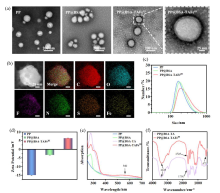
Fig. 2
Characterization of PP@BSA-TAFeIII NPs. (a) TEM images of PP NPs, PP@BSA NPs and PP@BSA-TAFeIII NPs; (b) TEM mapping image of PP@BSA-TAFeIII NPs; (c) Size distribution and (d) zeta potential of PP NPs, PP@BSA NPs and PP@BSA-TAFeIII NPs; (e) UV-vis absorption spectra of different nanoparticles (concentration of PFCE is 2 mmol/L); (f) FT-IR spectra of PP@BSA-TA NPs and PP@BSA-TAFeIII NPs (concentration of PFCE is 100 mmol/L)
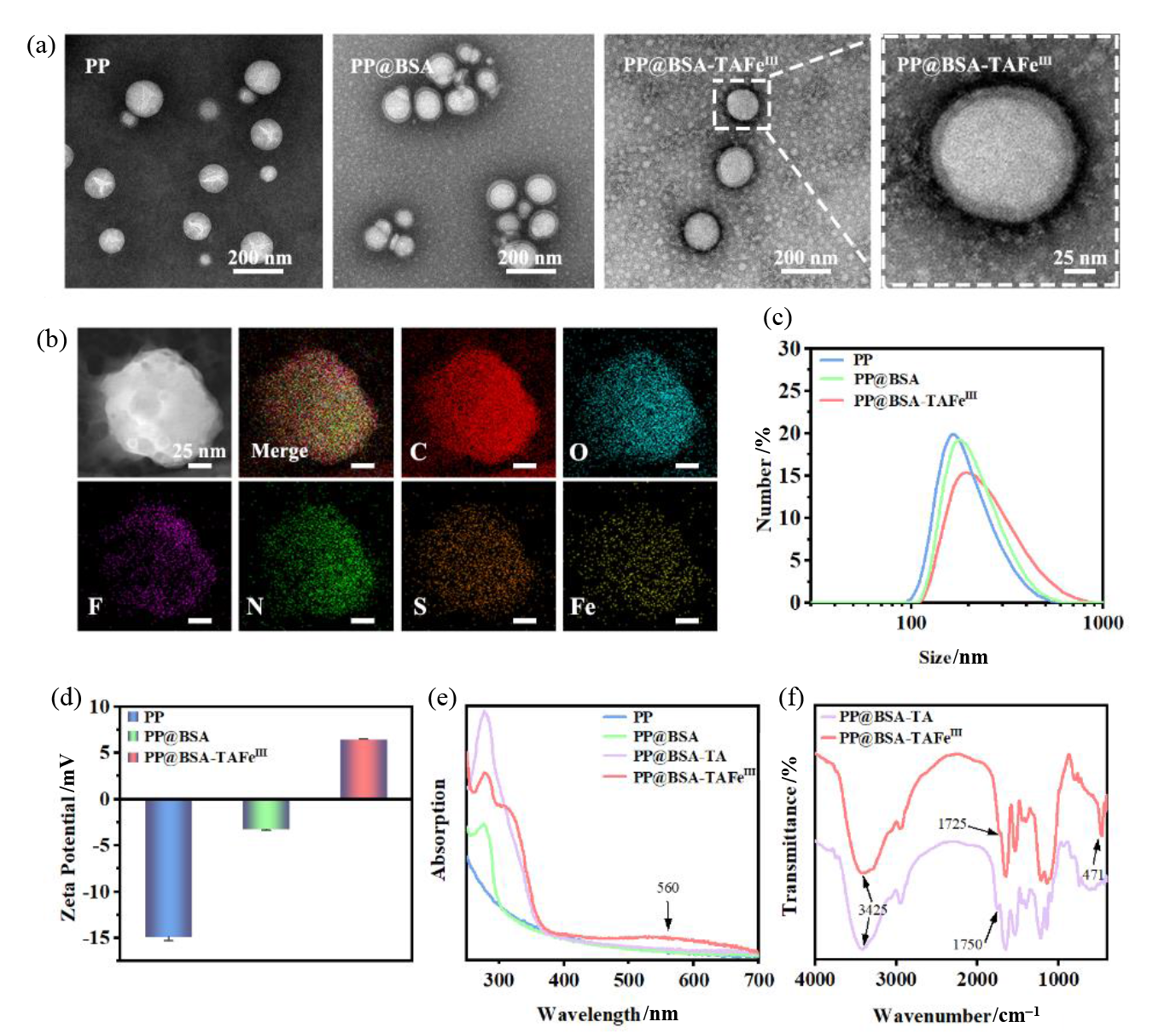
Fig. 3
In vitro characterization of PP@BSA-TAFeIII NPs. (a) pH-dependent release of Fe3+ by PP@BSA-TAFeIII NPs solution; (b) Temperature variation curves of PP@BSA-TAFeIII NPs solutions with different concentrations under the irradiation of 808 nm laser with 1.0 W·cm-2; (c) Temperature variation curves of PP@BSA-TAFeIII NPs solutions under the cyclic irradiation of 808 nm laser with 1.0 W·cm-2; (d) Gel electrophoresis of proteins adsorbed on PP@BSA-TAFeIII NPs (Probe), PP@BSA-TA NPs and PP@BSA NPs treated with FBS; (e) Quantitative detection of transferrin adsorbed on different nanoparticles by ELISA; (f) 19F MRI images of PP@BSA-TAFeIII NPs solutions at different concentrations, and the linear fitting curve of signal intensity versus concentration
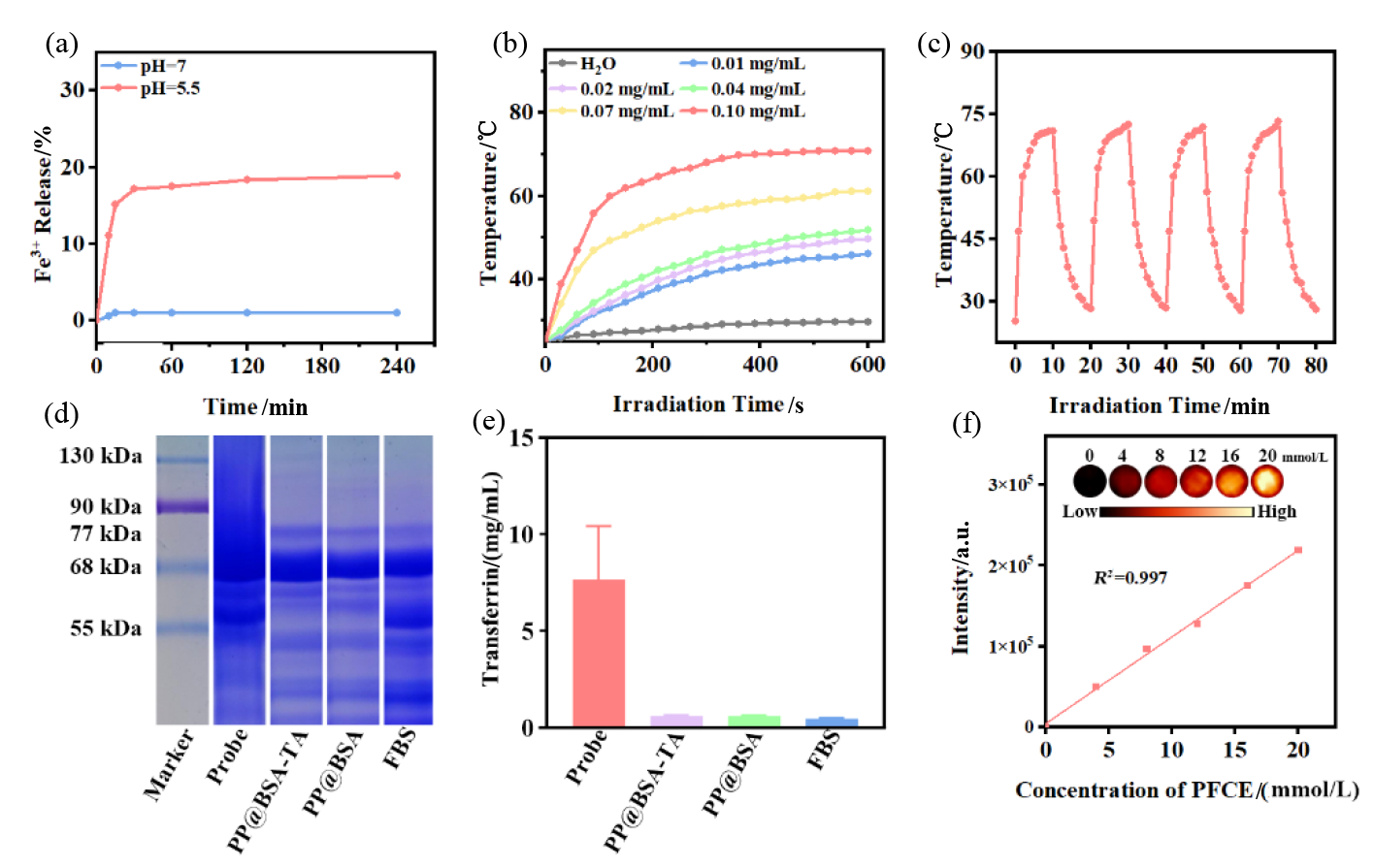
Fig. 4
CLSM images of 4Tl cells treated with PP@BSA-TAFeIII NPs+FBS, PP@BSA-TAFeIII NPs and PP@BSA NPs + FBS. Cell nuclei was stained by DAPI, and cytoskeleton was stained by FITC- phalloidin
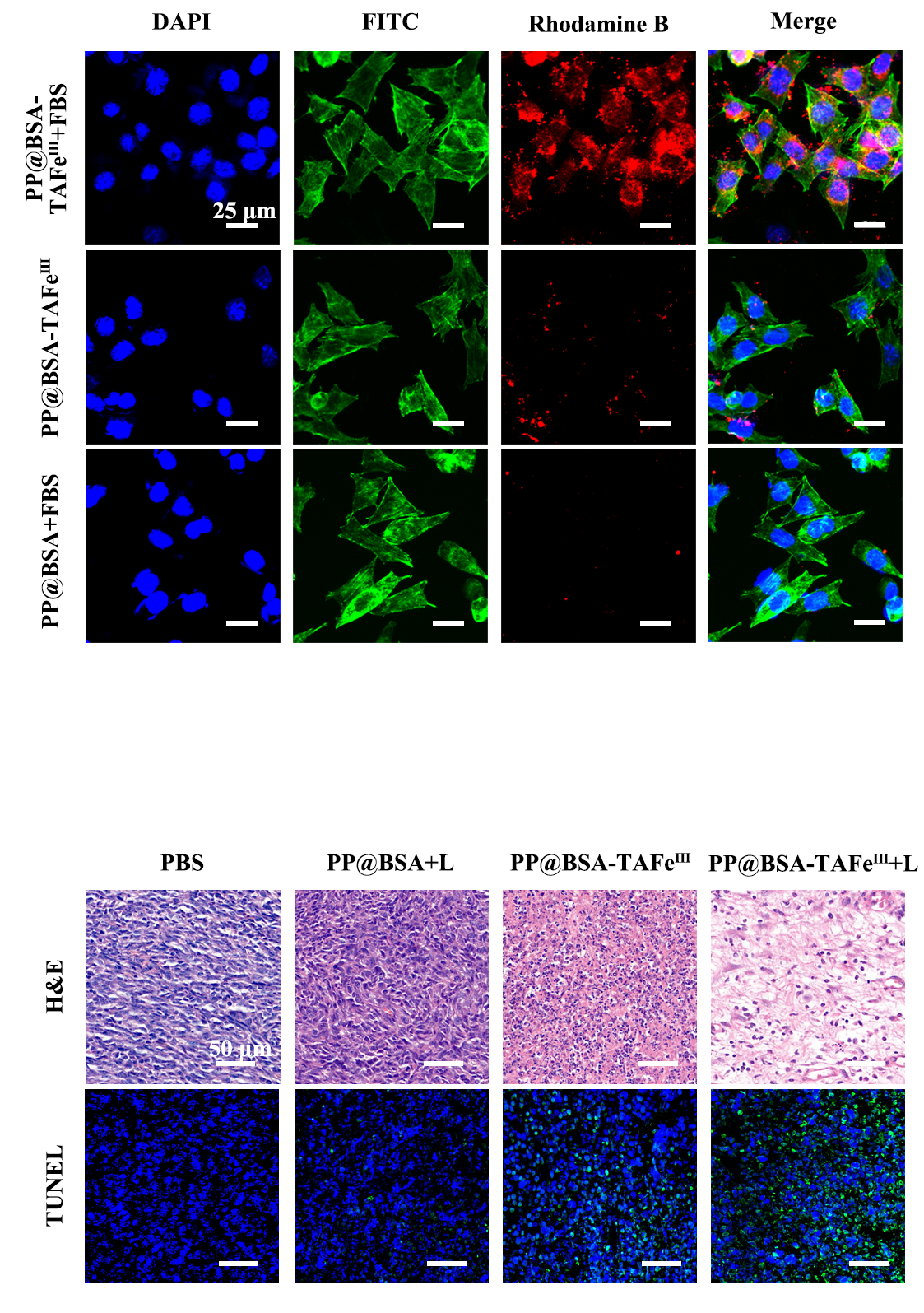
Fig. 5
In vitro antitumor efficacy of PP@BSA-TAFeIII NPs. (a) Viabilities of 4T1 cells treated with different nanoparticles; (b) CLSM images of ROS levels in 4Tl cells treated with different concentrations of Fe3+ in PP@BSA-TAFeIII NPs (cell nuclei was stained by Hoechst 33342); (c) TEM images of 4T1 cells treated with PP@BSA-TAFeIII NPs for different times; (d) CLSM images of 4T1 cells stained with Calcein-AM/PI (green fluorescence for live cells, red fluorescence for dead cells) after treatment with different concentrations of Fe3+ in PP@BSA-TAFeIII NPs and irradiation with 808 nm laser (1 W·cm-2) for 10 min
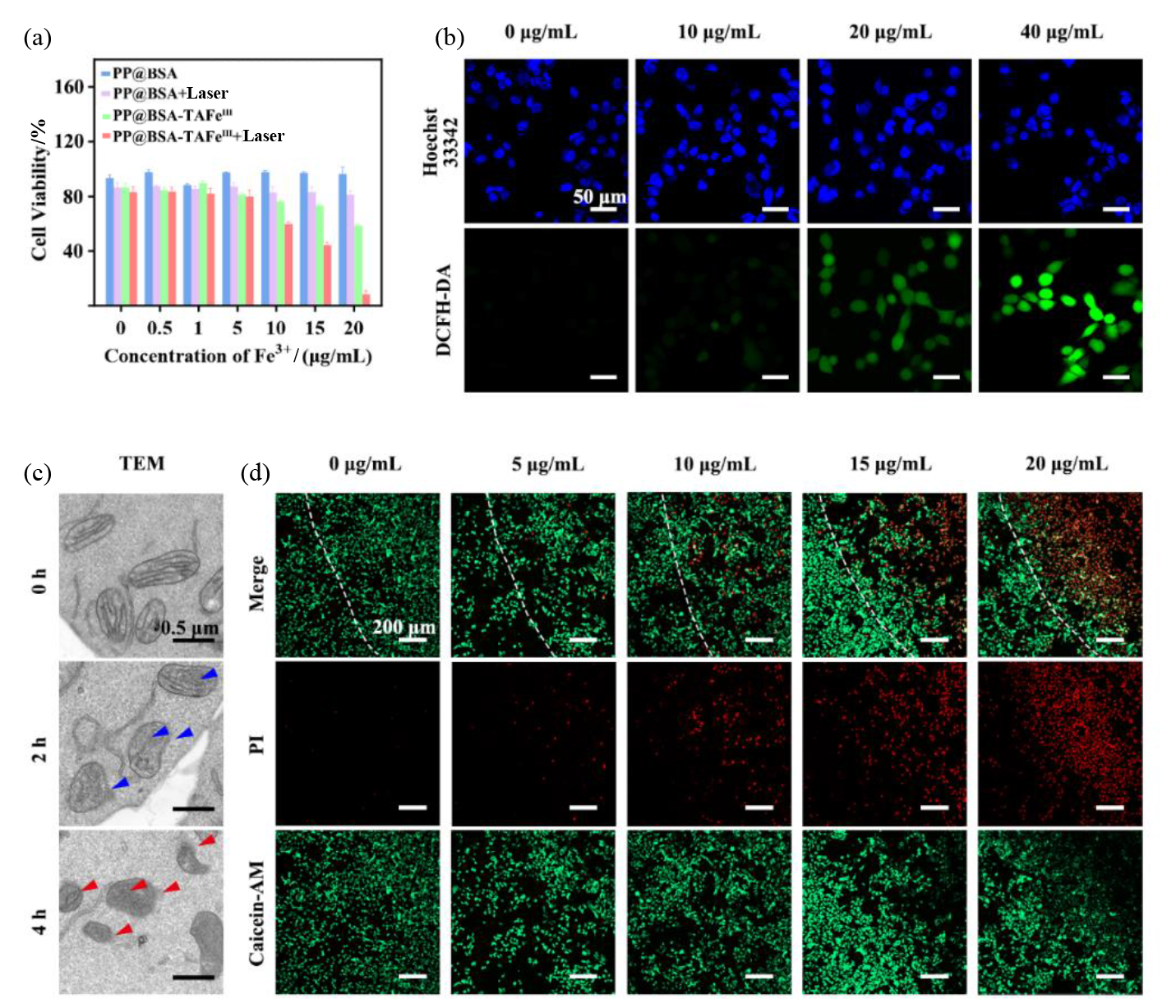
Fig. 6
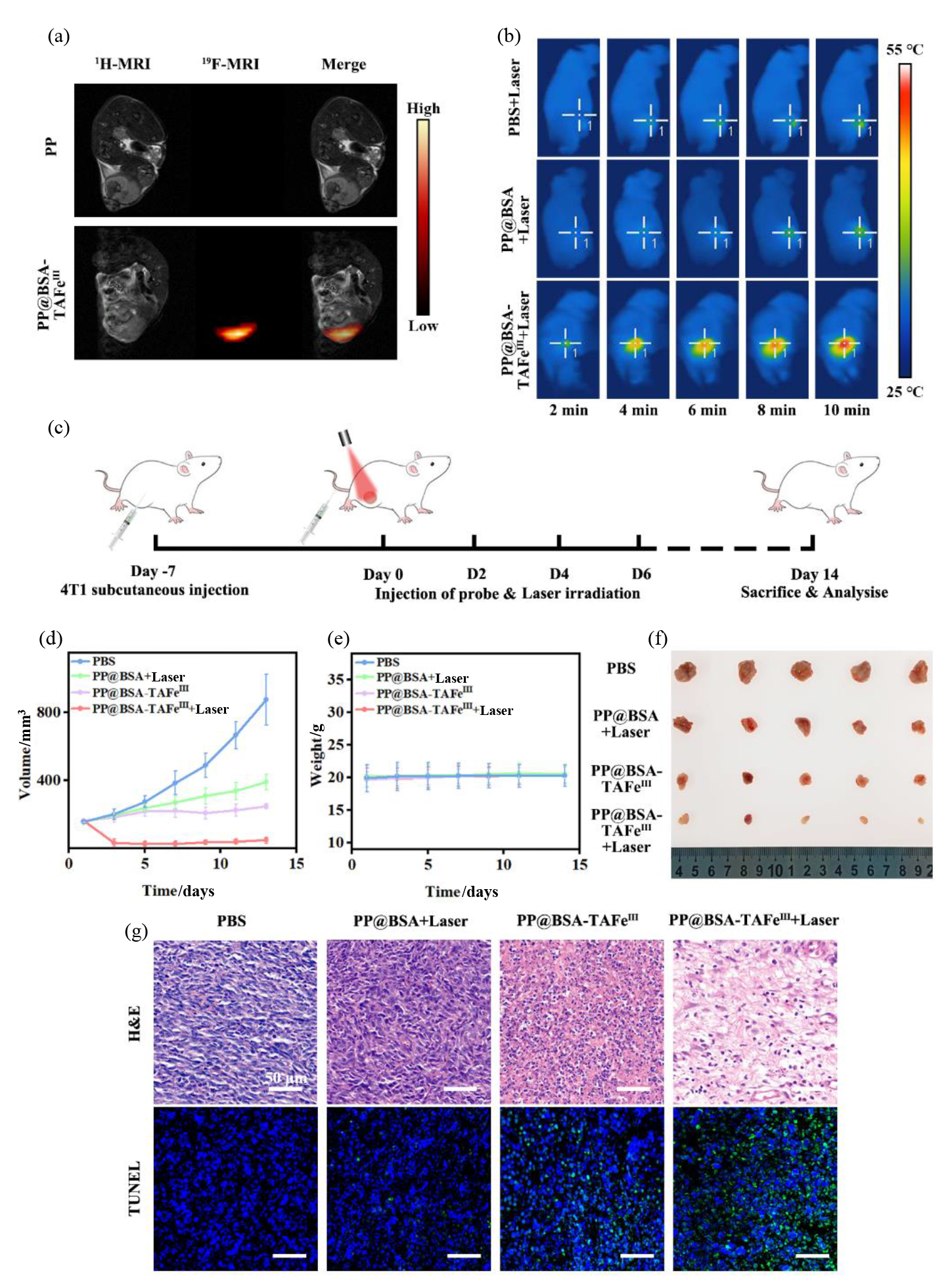
In Vivo tumor MR imaging and antitumor effect of PP@BSA-TAFeIII NPs. (a) 19F MRI images of 4T1 tumor-bearing mice after intravenous injection of PP@BSA-TAFeIII NPs or PP NPs for 12 h; (b) Infrared thermal photographs of the 4T1 tumor-bearing mice after intravenous injection of PBS, PP@BSA NPs or PP@BSA-TAFeIII NPs, followed by irradiation with 808 nm laser (1 W·cm-2); (c) Schematic illustration of the in vivo antitumor therapy; (d) Tumor volume growth curves, (e) body weight change curves and (f) tumor photographs of mice in different treatment groups; (g) H&E staining and TUNEL staining images of tumor tissues from mice in different treatment groups
| [1] |
HUH Y M, JUN Y W, SONG H T, et al. In vivo magnetic resonance detection of cancer by using multifunctional magnetic nanocrystals[J]. J Am Chem Soc, 2005, 127(35): 12387-12391.
doi: 10.1021/ja052337c |
| [2] |
FAROKHZAD O C, LANGER R. Impact of nanotechnology on drug delivery[J]. ACS Nano, 2009, 3(1): 16-20.
doi: 10.1021/nn900002m pmid: 19206243 |
| [3] |
LIU F, HE X, CHEN H, et al. Gram-scale synthesis of coordination polymer nanodots with renal clearance properties for cancer theranostic applications[J]. Nat Commun, 2015, 6(1): 8003.
doi: 10.1038/ncomms9003 |
| [4] |
KUMARI A, YADAV S K, YADAV S C. Biodegradable polymeric nanoparticles based drug delivery systems[J]. Colloids Surf B, 2010, 75(1): 1-18.
doi: 10.1016/j.colsurfb.2009.09.001 |
| [5] |
NAKAMURA T, MATSUSHITA H, SUGIHARA F, et al. Activatable 19F MRI nanoparticle probes for the detection of reducing environments[J]. Angew Chem Int Ed, 2015, 54(3): 1007-1010.
doi: 10.1002/anie.v54.3 |
| [6] |
CHEN H, SONG M, TANG J, et al. Ultrahigh 19F loaded Cu1.75S nanoprobes for simultaneous 19F magnetic resonance imaging and photothermal therapy[J]. ACS Nano, 2016, 10(1): 1355-1362.
doi: 10.1021/acsnano.5b06759 |
| [7] |
WANG G, YANG H, LI J, et al. Overview and progress of X-nuclei magnetic resonance imaging in biomedical studies[J]. Magn Reson Lett, 2023, 3(4): 327-343.
doi: 10.1016/j.mrl.2023.05.002 pmid: 40919505 |
| [8] |
TIROTTA I, DICHIARANTE V, PIGLIACELLI C, et al. 19F magnetic resonance imaging (MRI): From design of materials to clinical applications[J]. Chem Rev, 2015, 115(2): 1106-1129.
doi: 10.1021/cr500286d |
| [9] |
MOONSHI S S, ZHANG C, PENG H, et al. A unique 19F MRI agent for the tracking of non phagocytic cells in vivo[J]. Nanoscale, 2018, 10(17): 8226-8239.
doi: 10.1039/C8NR00703A |
| [10] | DÍAZ-LÓPEZ R, TSAPIS N, FATTAL E. Liquid perfluorocarbons as contrast agents for ultrasonography and 19F-MRI[J]. Pharm Res, 2010, 27(1): 1-16. |
| [11] |
ZHANG C, MOONSHI S S, WANG W, et al. High F-content perfluoropolyether-based nanoparticles for targeted detection of breast cancer by19F magnetic resonance and optical imaging[J]. ACS Nano, 2018, 12(9): 9162-9176.
doi: 10.1021/acsnano.8b03726 |
| [12] |
FUCHS A V, BAPAT A P, COWIN G J, et al. Switchable 19F MRI polymer theranostics: towards in situ quantifiable drug release[J]. Polym Chem, 2017, 8(34): 5157-5166.
doi: 10.1039/C7PY00345E |
| [13] |
FAN Y, CHEN L, ZHENG Y, et al. Nanoparticle-based activatable MRI probes for disease imaging and monitoring[J]. Chem Biomed Imaging, 2023, 1(3): 192-204.
doi: 10.1021/cbmi.3c00024 |
| [14] | LI L, LIU Y M, LI N N, et al. Multifunctional 19F MRI/CT imaging and combined photothermo-/chemo-therapy nanoplatform for tumor diagnosis and treatment[J]. Chemical Reagents, 2023, 45(9): 47-55. |
| 李璐, 刘怡萌, 李楠楠, 等. 多功能19F磁共振/CT成像及光热/化学联合治疗纳米平台用于肿瘤诊疗[J]. 化学试剂, 2023, 45(9):47-55. | |
| [15] |
GALISOVA A, BAR-SHIR A. Frontiers in 19F-MR imaging: nanofluorides and 19F-CEST as novel extensions to the 19F-MRI toolbox[J]. Chem Commun, 2023, 59(37): 5502-5513.
doi: 10.1039/D3CC00562C |
| [16] |
WANG Q, YU Y, CHANG Y, et al. Fluoropolymer-MOF hybrids with switchable hydrophilicity for 19F MRI-monitored cancer therapy[J]. ACS Nano, 2023, 17(9): 8483-8498.
doi: 10.1021/acsnano.3c00694 |
| [17] |
DALAL C, RAY R. Synthesis and applications of colloidal nanobioconjugates with modular multivalency: A review[J]. ACS Applied Nano Mater, 2024, 7(11): 12230-12248.
doi: 10.1021/acsanm.4c01371 |
| [18] |
WU W, JIANG C Z, ROY V A L. Designed synthesis and surface engineering strategies of magnetic iron oxide nanoparticles for biomedical applications[J]. Nanoscale, 2016, 8(47): 19421-19474.
pmid: 27812592 |
| [19] |
CHORMEY D S, ZAMAN B T, BORAHAN KUSTANTO T, et al. Biogenic synthesis of novel nanomaterials and their applications[J]. Nanoscale, 2023, 15(48): 19423-19447.
doi: 10.1039/D3NR03843B |
| [20] |
LYNCH I, CEDERVALL T, LUNDQVIST M, et al. The nanoparticle-protein complex as a biological entity[J]. Adv Colloid Interface Sci, 2007, 134-135: 167-174.
doi: 10.1016/j.cis.2007.04.021 |
| [21] |
CHEN H, GU Z, AN H, et al. Precise nanomedicine for intelligent therapy of cancer[J]. Sci China Chem, 2018, 61(12): 1503-1552.
doi: 10.1007/s11426-018-9397-5 |
| [22] |
CAI R, CHEN C. The crown and the scepter: Roles of the protein corona in nanomedicine[J]. Adv Mater, 2019, 31(45): 1805740.
doi: 10.1002/adma.v31.45 |
| [23] |
WANG X, ZHANG W. The janus of protein corona on nanoparticles for tumor targeting, immunotherapy and diagnosis[J]. J Control Release, 2022, 345: 832-850.
doi: 10.1016/j.jconrel.2022.03.056 |
| [24] |
KIM W, LY N K, HE Y, et al. Protein corona: Friend or foe? Co-opting serum proteins for nanoparticle delivery[J]. Adv Drug Deliv Rev, 2023, 192: 114635.
doi: 10.1016/j.addr.2022.114635 |
| [25] |
MISHRA R K, AHMAD A, VYAWAHARE A, et al. Biological effects of formation of protein corona onto nanoparticles[J]. Int J Biol Macromol, 2021, 175: 1-18.
doi: 10.1016/j.ijbiomac.2021.01.152 pmid: 33508360 |
| [26] |
HYUN H, PARK J, WILLIS K, et al. Surface modification of polymer nanoparticles with native albumin for enhancing drug delivery to solid tumors[J]. Biomaterials, 2018, 180: 206-224.
doi: S0142-9612(18)30508-8 pmid: 30048910 |
| [27] |
OH J Y, KIM H S, PALANIKUMAR L, et al. Cloaking nanoparticles with protein corona shield for targeted drug delivery[J]. Nat Commun, 2018, 9(1): 4548.
doi: 10.1038/s41467-018-06979-4 pmid: 30382085 |
| [28] |
SANTI M, MACCARI G, MEREGHETTI P, et al. Rational design of a transferrin-binding peptide sequence tailored to targeted nanoparticle internalization[J]. Bioconjugate Chem, 2017, 28(2): 471-480.
doi: 10.1021/acs.bioconjchem.6b00611 pmid: 27977155 |
| [29] | BARKER S J, THAYER M B, KIM C, et al. Targeting the transferrin receptor to transport antisense oligonucleotides across the mammalian blood-brain barrier[J]. Sci Transl Med, 2024, 16(760): 2245. |
| [30] |
JOHNSEN K B, BURKHART A, THOMSEN L B, et al. Targeting the transferrin receptor for brain drug delivery[J]. Prog Neurobiol, 2019, 181: 101665.
doi: 10.1016/j.pneurobio.2019.101665 |
| [31] |
KIM S, PHILIPPOT S, FONTANAY S, et al. pH- and glutathione-responsive release of curcumin from mesoporous silica nanoparticles coated using tannic acid-Fe(Ⅲ) complex[J]. RSC Advances, 2015, 5(110): 90550-90558.
doi: 10.1039/C5RA16004A |
| [32] | SUI M J, ZHANG L, WANG R F, et al. MRI-traceable nanoenzyme for cascade catalysis-enhanced immunotherapy[J]. Chinese J Magn Reson, 2025, 42(3): 231-248. |
| 隋美菊, 张磊, 王瑞芳, 等. MRI示踪的纳米酶用于级联反应增强的免疫治疗[J]. 波谱学杂志, 2025, 42(3): 231-248. | |
| [33] |
CHANG M, WANG M, LIU B, et al. A cancer nanovaccine based on an FeAl-layered double hydroxide framework for reactive oxygen species-augmented metalloimmunotherapy[J]. ACS Nano, 2024, 18(11): 8143-8156.
doi: 10.1021/acsnano.3c11960 pmid: 38436248 |
| [34] |
YANG H, YAO X, LIU Y, et al. Ferroptosis nanomedicine: Clinical challenges and opportunities for modulating tumor metabolic and immunological landscape[J]. ACS Nano, 2023, 17(16): 15328-15353.
doi: 10.1021/acsnano.3c04632 pmid: 37573530 |
| [35] |
YU Q, ZHOU J, WANG H, et al. A multiple-response cascade nanoreactor for starvation and deep catalysis chemodynamic assisted near-infrared-II mild photothermal therapy[J]. Chem Biomed Imaging, 2023, 1(3): 242-250.
doi: 10.1021/cbmi.2c00003 |
| [36] |
WU J R, WANG Y R, DU J Y, et al. pH-responsive metal-phenolic network nanoparticles for synergistic chemo-photodynamic antibacterial therapy[J]. ACS Appl Nano Mater, 2024, 7(24): 28408-28418.
doi: 10.1021/acsanm.4c05449 |
| [37] | JU F Y, YUAN X, QIAO B, et al. Tri-model imaging of perfluorohexane nanoparticles coated with iron and tannic acid[J]. Chinese J Ultrasound Med, 2020, 36(6): 568-570. |
| 鞠丰翼, 袁勋, 乔斌, 等. 单宁酸铁包裹的载全氟己烷纳米粒三模态成像的实验研究[J]. 中国超声医学杂志, 2020, 36(6): 568-570. | |
| [38] |
ZHANG P, HOU Y, ZENG J, et al. Coordinatively unsaturated Fe3+ based activatable probes for enhanced MRI and therapy of tumors[J]. Angew Chem Int Ed, 2019, 58(32): 11088-11096.
doi: 10.1002/anie.v58.32 |
| [39] | FU Z, CHEN R. Study of complexes of tannic acid with Fe(III) and Fe(II)[J]. J Anal Methods Chem, 2019, 2019: 3894571. |
| [1] | SUI Meiju, ZHANG Lei, WANG Ruifang, LUO Yingying, LI Sha, QIU Maosong, XU Qiuyi, CHEN Daiqin, CHEN Shizhen, ZHOU Xin. MRI-traceable Nanoenzyme for Cascade Catalysis-enhanced Immunotherapy [J]. Chinese Journal of Magnetic Resonance, 2025, 42(3): 231-248. |
| Viewed | ||||||
|
Full text |
|
|||||
|
Abstract |
|
|||||
