Measurement of Crosslinking Density of Rubbers by Analyzing Gaussian-Weighted 1H CPMG Relaxation Curves

  • GAO Peng-fei ,
  • CHU Lin-lin ,
  • YANG Yi ,
  • JIANG Ji-feng ,
  • WANG Jia-chen ,
  • YAO Ye-feng ,
  • ZHOU Bing
Expand
  • 1. Shanghai Key Laboratory of Magnetic Resonance, Department of Physics, East China Normal University, Shanghai 200062, China;
    2. Shanghai Niumag Electronic Technology Co., Ltd., Shanghai 200333, China;
    3. Double Coin Group Shanghai Tire Research Institute Co., Ltd., Shanghai 200237, China;
    4. School of Materials Science and Engineering, Tongji University, Shanghai 201804, China

Received date: 2017-07-29

  Online published: 2018-03-05
Abstract

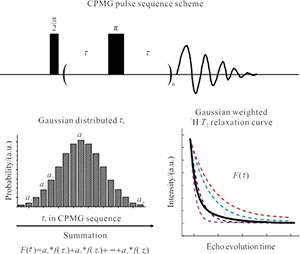
CPMG sequence is widely used to measure crosslink density of rubber. However, the crosslink density obtained by this technique has a strong dependence on the interval times between the pulses in CPMG sequence, and the results measured have only a weak correlation with rubber hardness. To overcome this shortcoming, we proposed in this work to construct a 1H T2 relaxation curve by summing Gaussian-weighted CPMG relaxation curves acquired at by varying the interval time between the pulses in CPMG sequence. Using the multi-echo Gaussian-weighted relaxation curve to calculate the crosslink density gave results that had greatly improved correlation with the rubber hardness. The new method was also fast and efficient, as it took only one-tenth of the experimental time required for the conventional 1H double quantum NMR (1H DQ NMR) experiment.

Cite this article

GAO Peng-fei , CHU Lin-lin , YANG Yi , JIANG Ji-feng , WANG Jia-chen , YAO Ye-feng , ZHOU Bing . Measurement of Crosslinking Density of Rubbers by Analyzing Gaussian-Weighted 1H CPMG Relaxation Curves[J]. Chinese Journal of Magnetic Resonance, 2018 , 35(1) : 60 -74 . DOI: 10.11938/cjmr20172590

Outlines

/