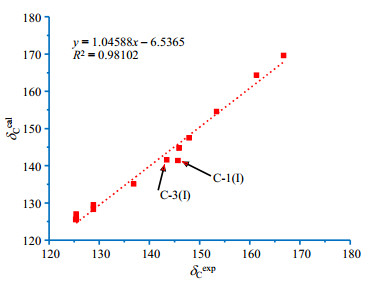
The tautomerism of organic molecules is widely observed in solution. While for solid organic chemicals, molecules often exist in the most stable tautomeric form. 2-Picolinic acid (PCA) is a very rare case which contains both the neutral molecules and zwitterions in the same crystal structure. Chemical shift assignment for PCA by experimental approach, e.g., 2D NMR methods, is extremely time consuming because the 1H spin-lattice relaxation time (T1) is too long. Density functional theory (DFT) calculation, especially using a periodic model, is an alternative protocol to fix this issue. However, the original crystal structure of PCA cannot be submitted directly for the calculation task due to the proton positional disorder. In this contribution, a virtual structure was constructed via crystallography approach. Theoretical 13C chemical shifts were obtained basing on this virtual model, which are consistent with the experimental values. Also, both neutral PCA and zwitterion demonstrated their featured chemical shifts, such information can be utilized to analyze the molecular states of PCA in its crystalline complexes.
[1] ANTONOV L. Tautomerism:methods and theories[M]. Weinheim:Wiley-VCH, 2003.
[2] ELGUERO J, KATRITZKY A R, DENISKO O V. Tautomerism of heterocycles[M]. New York:Academic Press, 1976.
[3] SMITH M B, MARCH J. March's advanced organic chemistry:reactions, mechanisms, and structure[M]. 6th ed. New York:Wiley-Interscience, 2007.
[4] WU Z W, ZHANG R, RONG Z M. Azo-hydrazone tautomerism of azo dyes[J]. J Chem Ind Eng, 2015, 66(1):52-59. 吴祖望, 张蓉, 荣泽明. 论偶氮染料的偶氮-腙互变异构[J]. 应用化学, 2015, 66(1):52-59.
[5] MASAND V H, MAHAJAN D T, HADDA T B, et al. Does tautomerism influence the outcome of QSAR modeling?[J]. Med Chem Res, 2014, 23:1742-1757.
[6] IVANOVA D, DENEVA V, NEDELTCHEVA D, et al. Tautomeric transformations of piroxicam in solution:a combined experimental and theoretical study[J]. RSC Adv, 2015, 5(40):31852-31860.
[7] CRUZ-CABEZA A J, GROOM C R. Identification, classification and relative stability of tautomers in the Cambridge structural database[J]. CrystEngComm, 2011, 13(1):93-98.
[8] BAUER M, HARRIS R K, RAO R C, et al. NMR study of desmotropy in Irbesartan, a tetrazole-containing pharmaceutical compound[J]. J Chem Soc, Perkin Trans, 1998, 2(3):475-482.
[9] KUMAR S S, NANGIA A. A solubility comparison of neutral and zwitterionic polymorphs[J]. Cryst Growth Des, 2014, 14(4):1865-1881.
[10] TOTHADI S, BHOGALA B R, GORANTLA A R, et al. Triclabendazole:an intriguing case of co-existence of conformational and tautomeric polymorphism[J]. Chem Asian J, 2012, 7(2):330-342.
[11] MIRMEHRABI M, ROHANI S, MURTHY K S K, et al. Characterization of tautomeric forms of ranitidine hydrochloride:thermal analysis, solid-state NMR, X-ray[J]. J Cryst Growth, 2004, 260(3-4):517-526.
[12] WANG X J, KONG M M, LI D X, et al. Stanozolol-aromatic carboxylic acid crystalline complexes:flexible tautomeric/ionization states and supramolecular synthons[J]. Cryst Eng Comm, 2019, DOI:10.1039/C8CE01439F.
[13] HAMAZAKI H, HOSOMI, H, TAKEDA, S, et al. 2-Pyridinecarboxylic acid[J]. Acta Cryst Sect C:Cryst Struct Commun, 1998, 54(10):IUC9800049.
[14] LUO C, LIANG W D, CHEN X, et al. Pharmaceutical cocrystals of naringenin with improved dissolution performance[J]. CrystEngComm, 2018, 20(22):3025-3033.
[15] GRANT R S, COGGAN S E, SMYTHE G A. The physiological action of picolinic acid in the human brain[J]. Int J Tryptophan Res, 2009, 2(2):71-79.
[16] LOU X B, SHEN M, LI C, et al. Reduction of the 13C cross-polarization experimental time for pharmaceutical samples with long T1 by ball milling in solid-state NMR[J]. Solid State Nucl Magn Reson, 2018, 94(16):20-25.
[17] WANG L, LUO M, LI J H, et al. Sweet theophylline cocrystal with two tautomers of acesulfame[J]. Cryst Growth Des, 2015, 15(6):2574-2578.
[18] LI J H, FU X, LI J Y, et al. Quinine acesulfamates[J]. Cryst Growth Des, 2016, 17(1):58-66.
[19] YUAN Y, WANG L, LI D X, et al. How many parameters can affect the solid form of cocrystallization products in mechanochemical reactions? a case study[J]. Cryst Growth Des, 2018, 18(12):7244-7247.
[20] SHELDRICK G M. Crystal structure refinement with SHELXL[J]. Acta Cryst Sect C:Struct Chem, 2015, 71(1):3-8.
[21] SCHAEFER J, SEFCIK M D, STEJSKAL E O, et al. Total suppression of sidebands in CPMAS C-13 NMR[J]. J Magn Reson, 1982, 49(2):341-345.
[22] BALIMANN G E, GROOMBRIDGE C J, HARRIS R K, et al. Chemical applications of high-resolution 13C NMR spectra for solids[J]. Philos Trans R Soc Lond A, 1981, 299:643-663.
[23] CLARK S J, SEGALL M D, PICKARD C J, et al. First principles methods using CASTEP[J]. Z Kristallogr, 2005, 220(5-6):567-570.
[24] STEED K M, STEED J W. Packing problems:high Z' crystal structures and their relationship to cocrystals, inclusion compounds, and polymorphism[J]. Chem Rev, 2015, 115(8):2895-2933.
[25] HOSER A A, SOVAGO I, LANZA A, et al. A crystal structure prediction enigma solved:the gallic acid monohydrate system-surprises at 10 K[J]. Chem Commun, 2017, 53(5):925-928.
[26] ZHENG A M, LIU S B, DENG F. 13C shielding tensors of crystalline amino acids and peptides:theoretical predictions based on periodic structure models[J]. J Comput Chem, 2009, 30(2):222-235.
[27] TATTON A S, PHARM T N, VOGT F G, et al. Probing hydrogen bonding in cocrystals and amorphous dispersions using 14N-1H HMQC solid-state NMR[J]. Mol Pharmaceutics, 2013, 10(3):999-1007.
[28] JOSEPH A, ALVES J S R, BERNARDES C E S, et al. Tautomer selection through solvate formation:the case of 5-hydroxynicotinic acid[J]. CrystEngComm, 2019, 21(13):2220-2233.

