
Chinese Journal of Magnetic Resonance ›› 2023, Vol. 40 ›› Issue (2): 220-238.doi: 10.11938/cjmr20223013
• Review Articles • Previous Articles
QIAN Chengyi,WANG Yuanjun*( )
Received:2022-08-12
Published:2023-06-05
Online:2022-11-08
Contact:
WANG Yuanjun
E-mail:yjusst@126.com
CLC Number:
QIAN Chengyi,WANG Yuanjun. Research Progress on Imaging Classification of Alzheimer’s Disease Based on Deep Learning[J]. Chinese Journal of Magnetic Resonance, 2023, 40(2): 220-238.
Add to citation manager EndNote|Reference Manager|ProCite|BibTeX|RefWorks
Fig. 1
Schematic diagram of CNN model
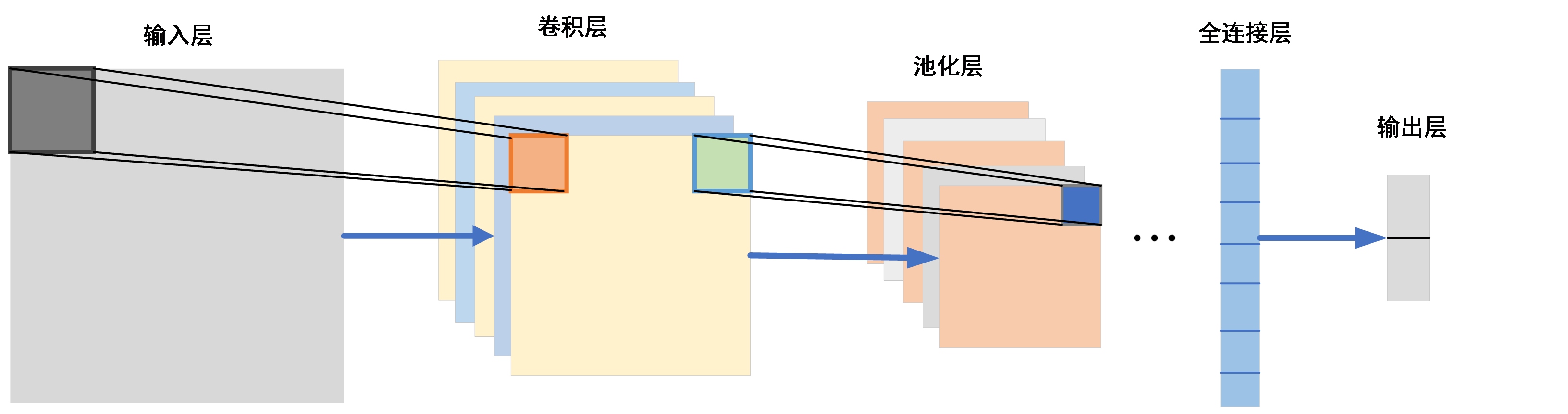
Fig. 2
Schematic diagram of RNN model
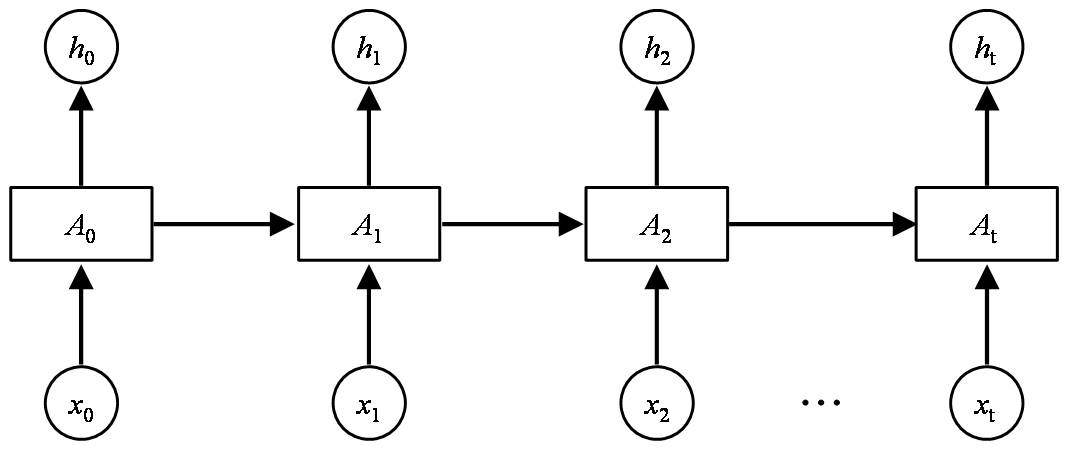
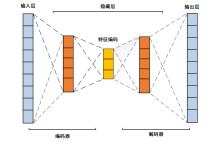
Fig. 3
Schematic diagram of AE network
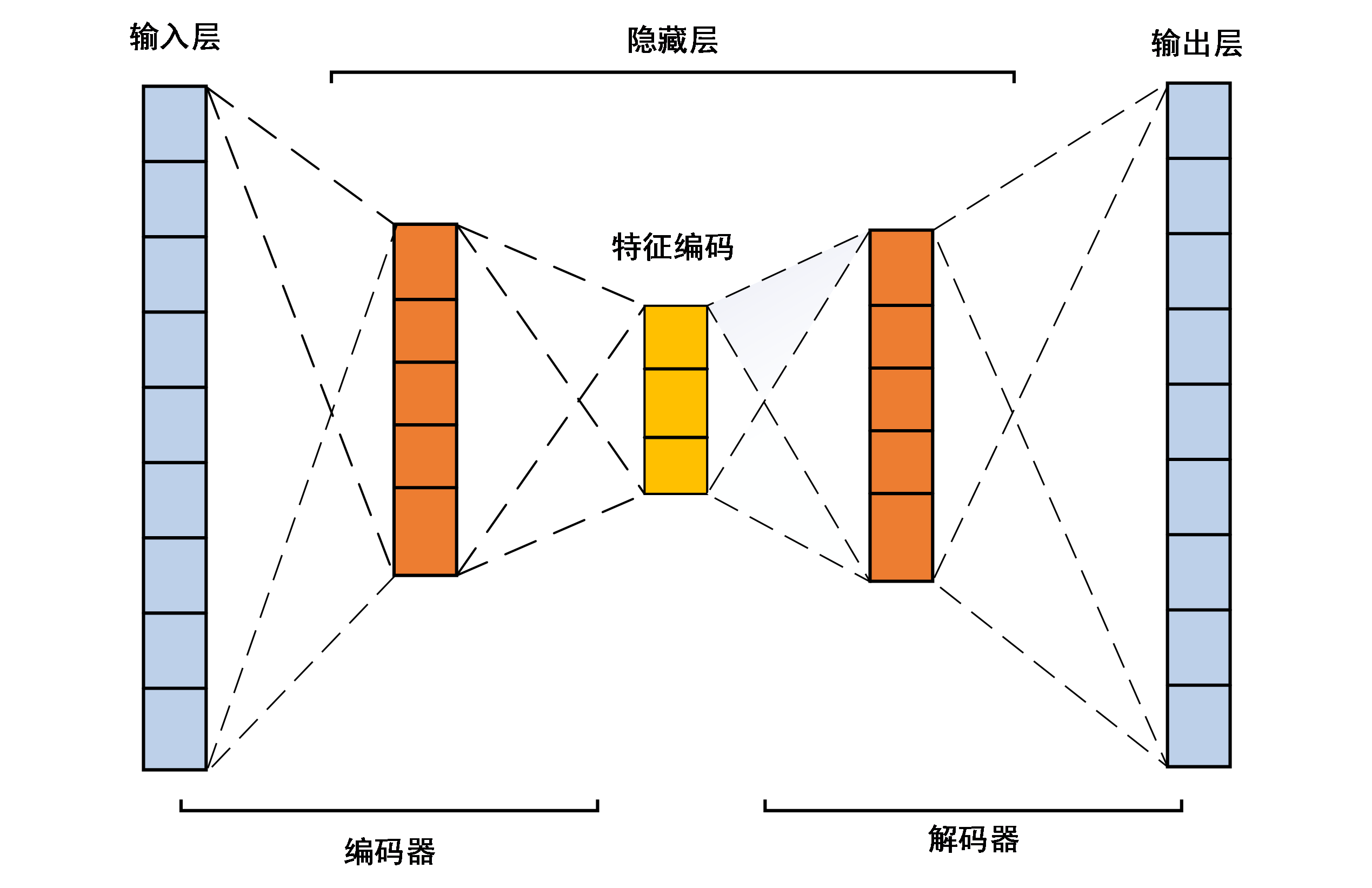
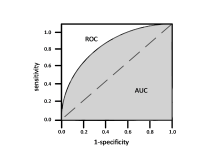
Fig. 4
Schematic diagram of ROC and AUC
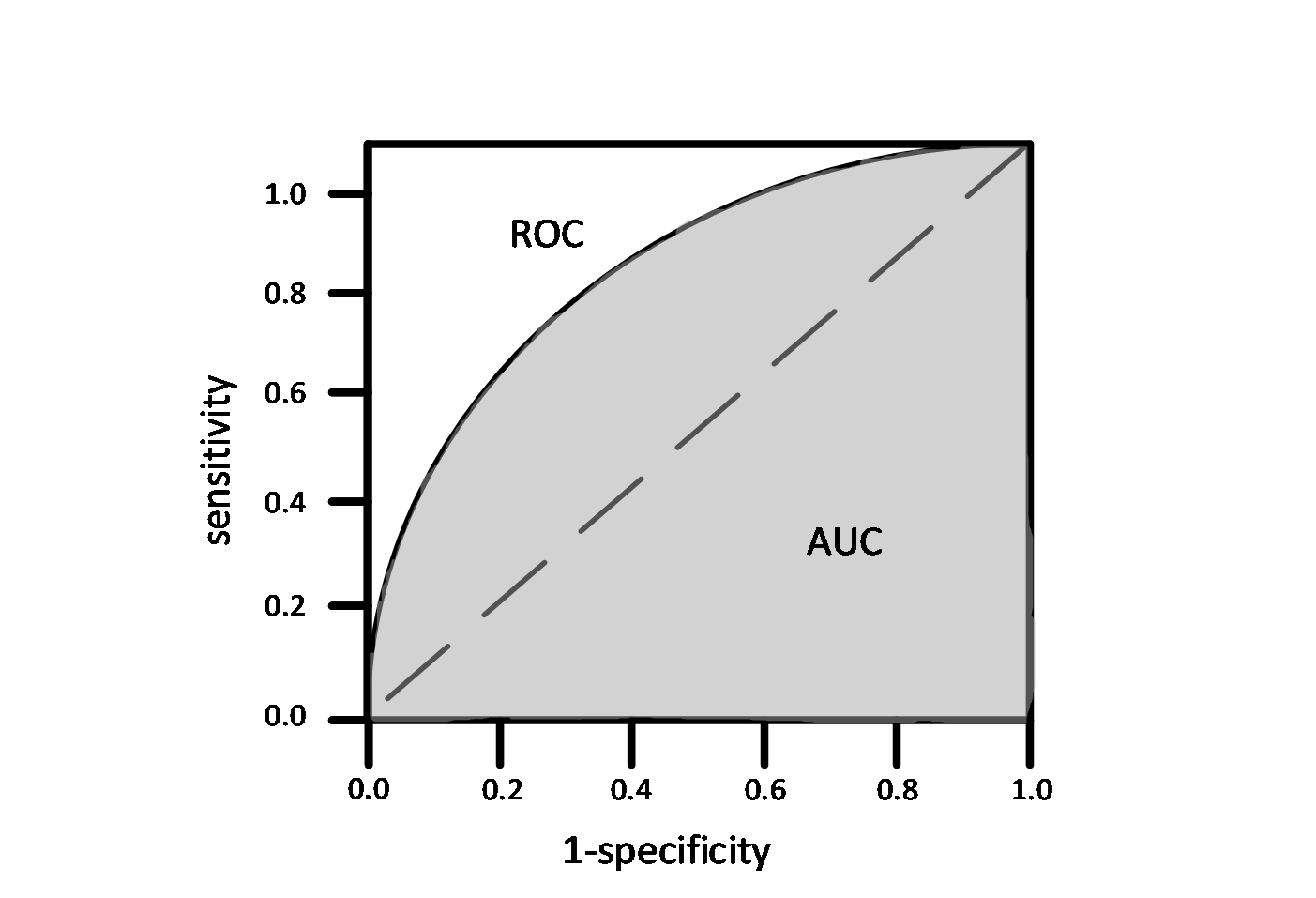

Table 1
Details of popular public dataset
| 数据集 | 类别 | 数据集大小 | 图像模态 |
|---|---|---|---|
| ADNI | AD MCI HC | 192 398 229 | sMRI、DTI、fMRI、PET |
| OASIS | AD HC | 100 316 | sMRI、DTI、fMRI、PET |
| IXI | HC | 约600 | sMRI、DTI、磁共振血管造影 |
Table 2
Performance comparison of different models
| 第一作者 | 分类任务 | 数据模态 | 数据集 | 测试方法 | 分类模型 | 准确率% | |||
|---|---|---|---|---|---|---|---|---|---|
| 郁松[ | AD/HC | sMRI | 1015 HC 575 AD 1709 MCI | 训练集60% 验证集20% 测试集20% | 3D ResNet-101 | 97.425 | |||
| Parmar[ | AD/HC | fMRI | 30 AD 30 HC | 训练集60% 验证集20% 测试集20% | 3D CNN | 94.58 | |||
| Bi[ | AD/HC MCI/HC AD/MCI AD/HC/MCI | fMRI | 118 AD 295 HC 335 MCI | 五折交叉验证 | RNN,ELM | 91.3 (AUC) 80.5 (AUC) 82.4 (AUC) 84.7 (AUC) | |||
| Yi??i?T[ | AD/HC MCI/HC | sMRI | 训练集 30 AD 316 HC 70 MCI | 测试集 46 AD+MCI 23 HC | / | 2D CNN | 83 82 | ||
| Punjabi[ | AD/HC | PET sMRI+PET | 共1299 | / | 3D CNN | 85.15 92.34 | |||
| Zhang[ | AD/HC pMCI/sMCI | sMRI | 200 AD 231 HC 172 pMCI 232 sMCI | 五折交叉验证 | 3D ResAttNet | 91.3 82.1 | |||
| Qiu[ | AD/HC | sMRI+性别+年龄+MMSE | / | 训练集60% 验证集20% 测试集20% | FCN | 96.8 | |||
| Deng[ | AD/HC | DTI+sMRI | 98 AD 100 HC | 训练集60% 验证集20% 测试集20% | CNN | 90.00 | |||
| Marzban[ | AD/HC MCI/HC | DTI+sMRI | 115 AD 185 HC 106 MCI | 十折交叉验证 | CNN | 93.5 79.6 | |||
| Kang[ | EMCI/HC | DTI+sMRI | 50 HC 70 EMCI | 训练集80% 测试集20% | VGG-16,LASSO | 94.2 | |||
| Kwak[ | AD/HC sMCI/pMCI | sMRI | 110 AD 109 HC 34 pMCI 81 sMCI | 五折交叉验证 | DenseNet | 93.75 73.90 | |||
| Ju[ | MCI/HC | fMRI | 91 MCI 79 HC | 十折交叉验证 | AE | 86.47 | |||
| Baydargil[ | AD/MCI/HC | PET | 141 AD 105 MCI 70 HC | 训练集80% 验证集10% 测试集10% | CAE | 98.67 | |||
| Guan[ | AD/HC pMCI/sMCI | sMRI | 384 AD 392 HC 401 sMCI 197 pMCI | 训练集 90% 测试集 10% | ResNet、pABN | 90.7 79.3 | |||
| Li[ | AD/MCI/HC | MRI | 237 AD 288 MCI 262 HC | 训练集65% 测试集 35% | ResNet-200 (迁移学习) | 83 | |||
| Basaia[ | AD/HC sMCI/pMCI | sMRI | 294 AD 352 HC 253 pMCI 510 sMCI | 训练集90% 测试集10% | 3D FCN(迁移学习) | 99.2 75.1 | |||
| 孔伶旭[ | EMCI/HC | fMRI | 32 HC 32 EMCI | 五折交叉验证 | Mobilenet(迁移学习) | 73.67 | |||
| Bin[ | AD/HC | sMRI | 100 AD 100 HC | 五折交叉验证 | Inception-v3 (迁移学习) | 99.45 | |||
| Massalimova[ | AD/MCI/HC | DTI | 训练集 59 AD 308 HC 7 MCI | 测试集 16 AD 74 HC 1 MCI | / | ResNet-18(迁移学习) | 97 | ||
| Mehmood[ | AD/HC EMCI/LMCI | sMRI | 75 AD 85 HC 70 EMCI 70 LMCI | 训练集64% 验证集16% 测试集20% | VGG-19(迁移学习) | 95.33 83.72 | |||
| Raju[ | 非常轻度痴呆/轻度痴呆/中度痴呆/HC(四分类) | sMRI | 1013非常轻度痴呆 896轻度痴呆 64中度痴呆 3200 HC(训练集) | 334非常轻度痴呆 139轻度痴呆 10中度痴呆 530 HC(测试集) | VGG-16(迁移学习) | 99 | |||
| Lian[ | AD/HC sMCI/pMCI | sMRI | 数据集1 199 AD 229 HC 167 pMCI 226 sMCI | 数据集2 159 AD 200 HC 38 pMCI 239 sMCI | 两个数据集间 交叉验证 | H-FCN(迁移学习) | 90.3 80.9 | ||
| Oh[ | AD/HC sMCI/pMCI | sMRI | 198 AD 230 HC 166 pMCI 101 sMCI | 五折交叉验证 | 3D CNN,ICAE (迁移学习) | 88.6 73.95 | |||
| 金祝新[ | AD/MCI MCI/HC AD/HC | sMRI | 267 AD 574 HC 446 MCI | 训练集90% 测试集10% | 3D CNN(迁移学习) | 94.6 92.5 90.9 | |||
| 曾安[ | AD/HC pMCI/HC pMCI/sMCI | sMRI | 137 AD 162 HC 76 pMCI 134 sMCI | 五折交叉验证 | 2D CNN(集成学习) | 81 79 62 | |||
| Bi[ | AD/HC MCI/HC AD/MCI AD/MCI/HC | sMRI | 243 AD 307 HC 525 MCI | / | PCANet,k-means (集成学习) | 89.15 92.6 97.01 91.25 | |||
| Choi[ | AD/HC | sMRI | 715 AD 335 HC 305 MCI | 训练集60% 验证集20% 测试集20% | VGG-16,GoogLeNet,AlexNet(集成学习) | 93.84 | |||
| Venugopalan[ | AD/HC | sMRI+电子病历+基因数据 | 共220 | 十折交叉验证 | AE,CNN,随机森林 (集成学习) | 88 | |||
| Zeng[ | sMCI/pMCI AD/HC sMCI/HC pMCI/HC AD/sMCI AD/pMCI | sMRI | 92 AD 92 HC 92 sMCI 95 pMCI | 训练集70% 测试集30% | PCA,DBN(多任务) | 87.78 98.62 92.31 96.67 99.62 91.89 | |||
| Spasov[ | sMCI/pMCI | sMRI | 192 AD 184 HC 409 MCI | 十折交叉验证 | CNN(多任务) | 86 | |||
| Liu[ | AD/HC MCI/HC | sMRI | 97 AD 11 HC 233 MCI | 五折交叉验证 | V-Net,DenseNet (多任务) | 88.9 76.2 | |||
| Abuhmed[ | AD/MCI/HC | PET+sMRI+神经心理学数据+神经病理学数据+认知评分 | 共1371 | 十折交叉验证 | BiLSTM,随机森林 (多任务) | 84.95 | |||
Table 3
Comparison of different interpretation methods and AD-related brain regions
| 第一作者 | 任务 | 分类模型 | 准确率% | 解释性方法 | 脑区 |
|---|---|---|---|---|---|
| Guan[ | AD/HC sMCI/pMCI | ResNet、pABN | 90.7 79.3 | CAM | 海马体、杏仁核、脑室、额叶、颞下回、颞上沟、顶枕沟、外侧裂 |
| Zhang[ | AD/HC | 3D-ResAttNet | 91.3 | Grad-CAM | 海马体、侧脑室、大部分皮质 |
| Raju[ | 轻度痴呆/非常轻度痴呆/中度痴呆/HC(四分类) | VGG-16(迁移学习) | 99 | Grad-CAM | 海马体、杏仁核、顶叶 |
| Oh[ | AD/HC sMCI/pMCI | 3D-CNN,ICAE | 86.6 73.95 | CSV | 内侧颞叶周围、左侧海马体 左侧杏仁核、角回、楔前回 |
| Qiu[ | AD/HC | FCN | 96.8 | 基于斑块生成热力图 | 海马、中额叶、杏仁核、颞叶 |
| 金祝新[ | AD/HC | 3D-CNN(迁移学习) | 90.9 | 输入添加遮挡块 | 内侧颞叶、海马体 |
| Kwak[ | sMCI/pMCI | DenseNet | 73.90 | 输入添加遮挡块 | 海马、梭状回、颞下回、楔前叶 |
| Venugopalan[ | AD/HC | AE,CNN,随机森林 | 88 | 特征屏蔽 | 海马体、杏仁核 |
| Shahamat[ | AD/HC | 3D-CNN | 85 | 遗传算法选取脑模板 | 左侧枕叶、左侧颞梭状皮层、右侧楔皮层、右额中回、右颞中回 |
Table A1
Chinese and English full names for corresponding abbreviations
| 缩写 | 中文全称 | 英文全称 |
|---|---|---|
| AD | 阿尔兹海默症 | Alzheimer disease |
| NFT | 神经原纤维缠结 | neurofibrillary tangles |
| CDR | 临床痴呆分级 | clinical dementia rating |
| MMSE | 简易智力状态检查量表 | mini-mental state examination |
| MCI | 轻度认知障碍 | mild cognitive impairment |
| EMCI | 早期轻度认知障碍 | early mild cognitive impairment |
| LMCI | 晚期轻度认知障碍 | later mild cognitive impairment |
| sMCI | 稳定型轻度认知障碍 | stable mild cognitive impairment |
| pMCI | 渐近型轻度认知障碍 | progressive mild cognitive impairment |
| HC | 健康对照组 | healthy control |
| ADNI | 阿尔兹海默症神经影像学计划 | Alzheimer’s disease neuroimaging initiative |
| OASIS | 开放存取影像研究 | open access series of imaging studies |
| IXI | 从图像中提取信息数据集 | information eXtraction from images |
| sMRI | 结构磁共振成像 | structural magnetic resonance imaging |
| PET | 正电子发射型计算机断层显像 | positron emission computed tomography |
| DTI | 扩散张量成像 | diffusion tensor imaging |
| fMRI | 功能磁共振成像 | functional magnetic resonance imaging |
| FA | 各向异性分数 | fractional anisotropy |
| MD | 平均扩散率 | mean diffusivity |
| RD | 径向扩散系数 | radial diffusivity |
| DC | 中心度特征 | degree centrality |
| ROI | 感兴趣区域 | region of interest |
| AAL | 自动解剖标记 | automated anatomical labeling |
| TP | 真阳性 | true positive |
| FP | 假阳性 | false positive |
| TN | 真阴性 | true negative |
| FN | 假阴性 | false negative |
| ROC | 接受者操作特征曲线 | receiver operating characteristic curve |
| AUC | 曲线下面积 | area under curve |
| CNN | 卷积神经网络 | convolutional neural networks |
| ILSVRC | ImageNet大规模视觉识别挑战赛 | ImageNet large scale visual recognition challenge |
| RNN | 循环神经网络 | recurrent neural network |
| BRNN | 双向循环神经网络 | bidirectional recurrent neural network |
| AE | 自动编码机 | autoencoder |
| CAE | 卷积自动编码机 | convolutional autoencoder |
| ICAE | 带Inception模块的卷积自动编码机 | inception modal based convolutional autoencoder |
| ResNet | 残差网络 | residual network |
| DenseNet | 密集连接网络 | densely connected convolutional network |
| pABN | 并行注意力增强双线性网络 | parallel attention-augmented bilinear network |
| k-means | k均值聚类 | k-means clustering algorithm |
| PCA | 主成分分析法 | principal components analysis |
| ELM | 极限学习机 | extreme learning machine |
| H-FCN | 分层全卷积神经网络 | hierarchical fully convolutional network |
| FCN | 全卷积神经网络 | fully convolutional network |
| ADAS-cog | 阿尔兹海默症评定量表-认知分量表 | Alzheimer’s disease assessment scale |
| BiLSTM | 双向长短期记忆网络 | bidirectional long short-term memory |
| MAE | 平均绝对误差 | mean absolute error |
| CAM | 类激活映射 | class activation mapping |
| Grad-CAM | 梯度加权类激活映射 | gradient-weighted class activation mapping |
| GAP | 全局平均池化 | global average pooling |
| CSV | 类显著映射 | class saliency visualization |
| [1] |
JACK Jr C R, BENNETT D A, BLENNOW K, et al. NIA-AA research framework: Toward a biological definition of Alzheimer’s disease[J]. Alzheimers Dement, 2018, 14(4): 535-562.
doi: 10.1016/j.jalz.2018.02.018 |
| [2] |
SCHELTENS P, DE STROOPER B, KIVIPELTO M, et al. Alzheimer’s disease[J]. The Lancet, 2021, 397(10284): 1577-1590.
doi: 10.1016/S0140-6736(20)32205-4 |
| [3] | ANDERSON N D. State of the science on mild cognitive impairment[J]. J Gerontol B Psycholo Sci Soc Sci, 2020, 75(7): 1359-1360. |
| [4] |
MAGGIPINTO T, BELLOTTI R, AMOROSO N, et al. DTI measurements for Alzheimer’s classification[J]. Phys Med Biol, 2017, 62(6): 2361-2375.
doi: 10.1088/1361-6560/aa5dbe |
| [5] |
LAHMIRI S, SHMUEL A. Performance of machine learning methods applied to structural MRI and ADAS cognitive scores in diagnosing Alzheimer’s disease[J]. Biomed Signal Proces, 2019, 52: 414-419.
doi: 10.1016/j.bspc.2018.08.009 |
| [6] |
ELSHATOURY H, AVOTS E, ANBARJAFARI G, et al. Volumetric histogram-based Alzheimer’s disease detection using support vector machine[J]. J Alzheimers Dis, 2019, 72(2): 515-524.
doi: 10.3233/JAD-190704 |
| [7] |
UYSAL G, OZTURK M. Hippocampal atrophy based Alzheimer’s disease diagnosis via machine learning methods[J]. J Neurosci Meth, 2020, 337: 108669.
doi: 10.1016/j.jneumeth.2020.108669 |
| [8] | CHU Y, XU W L. Review of early classification of Alzheimer’s disease based on computer-aided diagnosistechnology[J]. Computer Engineering & Science, 2022, 44(5): 879-893. |
| 楚阳, 徐文龙. 基于计算机辅助诊断技术的阿尔兹海默症早期分类研究综述[J]. 计算机工程与科学, 2022, 44(5): 879-893. | |
| [9] |
YAO X F, YUAN Z B, BU X X. The early predication of Alzheimer's disease based on intelligent radiomics technology[J]. Sci Technol Rev, 2021, 39(20): 101-109.
doi: 10.20506/rst.issue.39.1.3056 |
|
姚旭峰, 袁增贝, 卜溪溪. 基于智能影像基因组学技术的阿尔茨海默病预测进展[J]. 科技导报, 2021, 39(20): 101-109.
doi: 10.20506/rst.issue.39.1.3056 |
|
| [10] | ZHU Y X, FENG W, GUO X H. Application of deep learning method in brain image of Alzheimer’s disease[J]. Med Recapitulate, 2019, 25(18): 3562-3566. |
| 朱映璇, 冯巍, 郭秀花. 深度学习方法在阿尔茨海默病脑图像方面的应用进展[J]. 医学综述, 2019, 25(18): 3562-3566. | |
| [11] | TANVEER M, RICHHARIYA B, KHAN R U, et al. Machine learning techniques for the diagnosis of Alzheimer’s disease: a review[J]. ACM T Multim Comput, 2020, 16(1s): 30. |
| [12] |
FAN Z, XU F, QI X, et al. Classification of Alzheimer’s disease based on brain MRI and machine learning[J]. Neural Comput Appl, 2020, 32(7): 1927-1936.
doi: 10.1007/s00521-019-04495-0 |
| [13] |
KARAMI V, NITTARI G, TRAINI E, et al. An optimized decision tree with genetic algorithm rule-based approach to reveal the brain’s changes during Alzheimer’s disease dementia[J]. J Alzheimers Dis, 2021, 84(4): 1577-1584.
doi: 10.3233/JAD-210626 |
| [14] | ALICKOVIC E, SUBASI A, ALZHEIMERS DIS N. Automatic detection of Alzheimer disease based on histogram and random forest[C]// Banja Luka, BOSNIA & HERCEG: International Conference on Medical and Biological Engineering in Bosnia and Herzegovina (CMBEBIH), 2019, 73: 91-96. |
| [15] |
ABUHMED T, EI-SAPPAGH S, ALONSO J M. Robust hybrid deep learning models for Alzheimer’s progression detection[J]. Knowl-Based Syst, 2021, 213: 106688.
doi: 10.1016/j.knosys.2020.106688 |
| [16] | JU R H, HU C H, ZHOU P, et al. Early diagnosis of Alzheimer’s disease based on resting-state brain networks and deep learning[J]. IEEE ACM T Comput Bi, 2019, 16(1): 244-257. |
| [17] | BAYDARGIL H B, PARK J S, KANG D Y, et al. Classification of Alzheimer’s disease using stacked sparse convolutional autoencoder[C]// Jeju, SOUTH KOREA:19th International Conference on Control, Automation and Systems (ICCAS), 2019, 891-895. |
| [18] |
OH K, CHUNG Y C, KIM K W, et al. Classification and visualization of Alzheimer’s disease using volumetric convolutional neural network and transfer learning[J]. Sci Rep, 2019, 9(1): 18150.
doi: 10.1038/s41598-019-54548-6 |
| [19] |
BI X, ZHAO X G, HUANG H, et al. Functional brain network classification for Alzheimer’s disease detection with deep features and extreme learning machine[J]. Cogn Comput, 2020, 12(3): 513-527.
doi: 10.1007/s12559-019-09688-2 |
| [20] | YIĞIT A, ISIK Z. Applying deep learning models to structural MRI for stage prediction of Alzheimer’s disease[J]. Turk J Elec Eng & Comp Sci, 2020, 28(1): 196-210. |
| [21] | YU S, LIAO W H. An alzheimer’s disease classificationalgorithm based on 3D-ResNet[J]. Computer Engineering & Science, 2020, 42(6): 1068-1075. |
| 郁松, 廖文浩. 基于3D-ResNet的阿尔兹海默症分类算法研究[J]. 计算机工程与科学, 2020, 42(6): 1068-1075. | |
| [22] |
BI X L, LI S T, XIAO B, et al. Computer aided Alzheimer's disease diagnosis by an unsupervised deep learning technology[J]. Neurocomputing, 2020, 392: 296-304.
doi: 10.1016/j.neucom.2018.11.111 |
| [23] |
GUO H B, ZHANG Y J. Resting state fMRI and improved deep learning algorithm for earlier detection of Alzheimer’s disease[J]. IEEE Access, 2020, 8: 115383-115392.
doi: 10.1109/Access.6287639 |
| [24] | PARMAR H S, NUTTER B, LONG R, et al. Deep learning of volumetric 3D CNN for fMRI in Alzheimer’s disease classification[C]// Houston, TX: SPIE Medical Imaging Conference - Biomedical Applications in Molecular, Structural, and Functional Imaging, 2020, 11317. |
| [25] |
REGINOLD W, LUEDKE A C, ITORRALBA J, et al. Altered superficial white matter on tractography MRI in Alzheimer’s disease[J]. Dementia and Geriatric Cognitive Disorders Extra, 2016, 6(2): 233-241.
doi: 10.1159/000446770 |
| [26] | BIGHAM B, ZAMANPOUR S A, ZEMORSHIDI F, et al. Identification of superficial white matter abnormalities in Alzheimer’s disease and mild cognitive impairment using diffusion tensor imaging[J]. J Alzheimers Dis Rep, 2020, 4(1): 49-59. |
| [27] |
MASSALIMOVA A, VAROL H A, IEEE. Input agnostic deep learning for Alzheimer’s disease classification using multimodal MRI images[C]// Electr Network:43rd Annual International Conference of the IEEE-Engineering-in-Medicine-and-Biology-Society (IEEE EMBC), 2021, 10.1109/embc46164.2021.96298072875-2878.
doi: 10.1109/embc46164.2021.96298072875-2878 |
| [28] |
DENG L, WANG Y J. Hybrid diffusion tensor imaging feature-based AD classification[J]. J X-Ray Sci Technol, 2021, 29(1): 151-169.
doi: 10.3233/XST-200771 pmid: 33325450 |
| [29] |
MARZBAN E N, ELDEIB A M, YASSINE I A, et al. Alzheimer's disease diagnosis from diffusion tensor images using convolutional neural networks[J]. PLoS ONE, 2020, 15(3): e0230409.
doi: 10.1371/journal.pone.0230409 |
| [30] |
KANG L, JIANG J W, HUANG J J, et al. Identifying early mild cognitive impairment by multi-modality MRI-based deep learning[J]. Front Aging Neurosci, 2020, 12: 206.
doi: 10.3389/fnagi.2020.00206 pmid: 33101003 |
| [31] | GAO F. Integrated positron emission tomography/magnetic resonance imaging in clinical diagnosis of Alzheimer’s disease[J]. Eur J Radiol, 2021, 145: 1100170. |
| [32] |
RABINOVICI G D, GATSONIS C, APGAR C, et al. Association of amyloid positron emission tomography with subsequent change in clinical management among medicare beneficiaries with mild cognitive impairment or dementia[J]. JAMA-J Am Med Assoc, 2019, 321(13): 1286-1294.
doi: 10.1001/jama.2019.2000 |
| [33] |
PUNJABI A, MARTERSTECK A, WANG Y R, et al. Neuroimaging modality fusion in Alzheimer’s classification using convolutional neural networks[J]. PLoS ONE, 2019, 14(12): e0225759.
doi: 10.1371/journal.pone.0225759 |
| [34] | LI Y, DING W, WANG X, et al. Alzheimer’s disease classification model based on MED-3D transfer learning[C]// Proceedings of the 2nd International Symposium on Artificial Intelligence for Medicine Sciences, 2021, 394-398. |
| [35] | CHEN S, MA K, ZHENG Y. Med3d: Transfer learning for 3d medical image analysis[J]. arXiv preprint, arXiv:.00625, 2019. |
| [36] | KONG L X, WU H F, ZENG Y, et al. Transfer-learning feature extraction from rs-fMRI for classification of early mild cognitive impairment[J]. CAAI Transactions on Intelligent Systems, 2021, 16(4): 662-672. |
| 孔伶旭, 吴海锋, 曾玉, 等. 迁移学习特征提取的rs-fMRI早期轻度认知障碍分类[J]. 智能系统学报, 2021, 16(4): 662-672. | |
| [37] |
BIN TUFAIL A, MA Y K, ZHANG Q N. Binary classification of Alzheimer’s disease using sMRI imaging modality and deep learning[J]. J Digit Imaging, 2020, 33(5): 1073-1090.
doi: 10.1007/s10278-019-00265-5 |
| [38] |
MEHMOOD A, YANG S Y, FENG Z X, et al. A transfer learning approach for early diagnosis of Alzheimer’s disease on MRI images[J]. Neuroscience, 2021, 460: 43-52.
doi: 10.1016/j.neuroscience.2021.01.002 |
| [39] |
LIAN C F, LIU M X, ZHANG J, et al. Hierarchical fully convolutional network for joint atrophy localization and Alzheimer’s disease diagnosis using structural MRI[J]. IEEE Trans Pattern Anal Mach Intell, 2020, 42(4): 880-893.
doi: 10.1109/TPAMI.34 |
| [40] |
BASAIA S, AGOSTA F, WAGNER L, et al. Automated classification of Alzheimer's disease and mild cognitive impairment using a single MRI and deep neural networks[J]. Neuroimage-Clin, 2019, 21: 101645.
doi: 10.1016/j.nicl.2018.101645 |
| [41] |
CHOI J Y, LEE B H. Combining of multiple deep networks via ensemble generalization loss, based on mri images, for Alzheimer’s disease classification[J]. IEEE Signal Process Lett, 2020, 27: 206-210.
doi: 10.1109/LSP.97 |
| [42] | ZENG A, JIA L F, PAN D, et al. Early prognosis of Alzheimer’s disease based on convolutional neural networks and ensemble learning[J]. J Biomed Eng, 2019, 36(5): 711-719. |
| 曾安, 贾龙飞, 潘丹, 等. 基于卷积神经网络和集成学习的阿尔茨海默症早期诊断[J]. 生物医学工程学杂志, 2019, 36(5): 711-719. | |
| [43] |
SPASOV S, PASSAMONTI L, DUGGENTO A, et al. A parameter-efficient deep learning approach to predict conversion from mild cognitive impairment to Alzheimer’s disease[J]. Neuroimage, 2019, 189: 276-287.
doi: 10.1016/j.neuroimage.2019.01.031 |
| [44] |
AMIEVA H, OUVRARD C, GIULIOLI C, et al. Self-reported hearing loss, hearing aids, and cognitive decline in elderly adults: A 25-year study[J]. J Am Geriatr Soc, 2015, 63(10): 2099-2104.
doi: 10.1111/jgs.13649 pmid: 26480972 |
| [45] |
SARATXAGA C L, MOYA I, PICON A, et al. MRI deep learning-based solution for Alzheimer’s disease prediction[J]. J Pers Med, 2021, 11(9): 902.
doi: 10.3390/jpm11090902 |
| [46] |
ZENG N Y, LI H, PENG Y H. A new deep belief network-based multi-task learning for diagnosis of Alzheimer’s disease[J]. Neural Comput Appl, 2021, 10.1007/s00521-021-06149-6.
doi: 10.1007/s00521-021-06149-6 |
| [47] |
KATABATHULA S, WANG Q Y, XU R. Predict Alzheimer’s disease using hippocampus MRI data: a lightweight 3D deep convolutional network model with visual and global shape representations[J]. Alzheimers Res Ther, 2021, 13: 104.
doi: 10.1186/s13195-021-00837-0 |
| [48] |
LIU M H, LI F, YAN H, et al. A multi-model deep convolutional neural network for automatic hippocampus segmentation and classification in Alzheimer's disease[J]. Neuroimage, 2020, 208: 116459.
doi: 10.1016/j.neuroimage.2019.116459 |
| [49] |
ZHANG X, HAN L, ZHU W, et al. An explainable 3D residual self-attention deep neural network for joint atrophy localization and Alzheimer’s disease diagnosis using structural MRI[J]. IEEE J Biomed Health Inform, 2022, 26(11): 5289-5297.
doi: 10.1109/JBHI.2021.3066832 |
| [50] |
RAJU M, THIRUPALANI M, VIDHYABHARATHI S, et al. Deep learning based multilevel classification of Alzheimer’s disease using MRI scans[J]. IOP Conf Ser: Mater Sci Eng, 2021, 1084: 012017.
doi: 10.1088/1757-899X/1084/1/012017 |
| [51] |
GUAN H, WANG C Y, CHENG J, et al. A parallel attention-augmented bilinear network for early magnetic resonance imaging-based diagnosis of Alzheimer’s disease[J]. Hum Brain Mapp, 2022, 43(2): 760-772.
doi: 10.1002/hbm.v43.2 |
| [52] |
QIU S R, JOSHI P S, MILLER M I, et al. Development and validation of an interpretable deep learning framework for Alzheimer’s disease classification[J]. Brain, 2020, 143(6): 1920-1933.
doi: 10.1093/brain/awaa137 |
| [53] | 金祝新. 迁移学习与可视化辅助的阿尔茨海默症早期诊断[D]. 杭州: 杭州电子科技大学, 2019. |
| [54] |
KWAK K, STANFORD W, DAYAN E, et al. Identifying the regional substrates predictive of Alzheimer’s disease progression through a convolutional neural network model and occlusion[J]. Hum Brain Mapp, 2022, 43(18): 5509-5519.
doi: 10.1002/hbm.v43.18 |
| [55] |
VENUGOPALAN J, TONG L, HASSANZADEH H R, et al. Multimodal deep learning models for early detection of Alzheimer’s disease stage[J]. Sci Rep, 2021, 11(1): 3254.
doi: 10.1038/s41598-020-74399-w |
| [56] |
SHAHAMAT H, ABADEH M S. Brain MRI analysis using a deep learning based evolutionary approach[J]. Neural Netw, 2020, 126: 218-234.
doi: 10.1016/j.neunet.2020.03.017 |
| [57] |
BEHESHTI I, GANAIE M A, PALIWAL V, et al. Predicting brain age using machine learning algorithms: A comprehensive evaluation[J]. IEEE J Biomed Health Inform, 2022, 26(4): 1432-1440.
doi: 10.1109/JBHI.2021.3083187 |
| [58] |
BASHYAM V M, ERUS G, DOSHI J, et al. MRI signatures of brain age and disease over the lifespan based on a deep brain network and 14 468 individuals worldwide[J]. Brain, 2020, 143(7): 2312-2324.
doi: 10.1093/brain/awaa160 |
| [1] | LIU Kewen, JIANG Yukang, CHEN Fang, CHEN Junfei, LU Yuan, CHEN Li, LIU Chaoyang. A Deep Learning-based Method for LF-NMR Relaxation Time Spectrum Inversion [J]. Chinese Journal of Magnetic Resonance, 2026, 43(3): 307-320. |
| [2] | MA Suchao, WANG Yuanjun. Research Progress on Diffusion Magnetic Resonance Imaging Noise Reduction Methods Based on Deep Learning [J]. Chinese Journal of Magnetic Resonance, 2026, 43(3): 367-388. |
| [3] | XIE Xinyi, WANG Yuanjun. Research Progress on Super-resolution Reconstruction of Brain Diffusion Magnetic Resonance Images [J]. Chinese Journal of Magnetic Resonance, 2026, 43(2): 223-240. |
| [4] | XIANG Zhao, SUI Li, ZHANG Haotian, DUAN Mengyu, LIU Zhuorui. A Lightweight AD-Net Model for the Classification of Intracranial Tumors in MRI Images [J]. Chinese Journal of Magnetic Resonance, 2026, 43(1): 71-86. |
| [5] | LI Yinghao, WANG Lihui, WANG Sucheng, ZHU Zhongqi, HUANG Changdong, LI Renfeng, CAO Kaiming, HU Haiyang, JIA Yiming, LIANG Songtao, YANG Guang, LU Qing, WANG Hongzhi. Study on Pancreas Automatic Segmentation, Regional Quantification, and Diabetes Assessment [J]. Chinese Journal of Magnetic Resonance, 2025, 42(4): 378-389. |
| [6] | GAO Zhaoyao, ZHANG Zhan, HU Liangliang, XU Guangyu, ZHOU Sheng, HU Yuxin, LIN Zijie, ZHOU Chao. PMRI Image Reconstruction Method Based on Virtual Coils and GRAPPA-enhanced Network [J]. Chinese Journal of Magnetic Resonance, 2025, 42(4): 390-401. |
| [7] | ZHANG Mingyu, XIAO Sa, SHI Shengjie, ZHANG Xuecheng, ZHOU Xin. Research on a Multi-modal Enhanced Denoising Diffusion Model for Hyperpolarized 129Xe MRI [J]. Chinese Journal of Magnetic Resonance, 2025, 42(4): 364-377. |
| [8] | SUN Haoyun, WANG Lijia. Application of 3D ELD_MobileNetV2 Incorporating Attention Mechanism and Dilated Convolution in Hepatic Nodules Classification [J]. Chinese Journal of Magnetic Resonance, 2025, 42(2): 130-142. |
| [9] | CAO Fei, XU Qianqian, CHEN Hao, ZU Jie, LI Xiaowen, TIAN Jin, BAO Lei. An Intelligent Diagnosis Method for NIID Based on Cross Self-supervision and DWI [J]. Chinese Journal of Magnetic Resonance, 2025, 42(2): 154-163. |
| [10] | XUE Peiyang, GENG Chen, LI Yuxin, BAO Yifang, LU Yucheng, DAI Yakang. A Classification Method for Cerebral Aneurysms in TOF-MRA Based on Improved 3D ResNet50 Model [J]. Chinese Journal of Magnetic Resonance, 2025, 42(1): 56-66. |
| [11] | WANG Chenxu, GUO Xu, WANG Hui, ZHANG Xin, CHANG Yan, GUO Qingqian, HU Tao, FENG Xiaoyu, YANG Xiaodong. Study of Visual Hybrid Brain-Computer Interface Based on Wearable Magnetoencephalogram [J]. Chinese Journal of Magnetic Resonance, 2024, 41(4): 405-417. |
| [12] | NING Xinzhou, HUANG Zhen, CHEN Xiqu, LIU Xinjie, CHEN Gang, ZHANG Zhi, BAO Qingjia, LIU Chaoyang. Research on Transformer Super-Resolution Reconstruction Algorithm for Ultrafast Spatiotemporal Encoding Magnetic Resonance Imaging [J]. Chinese Journal of Magnetic Resonance, 2024, 41(4): 454-468. |
| [13] | YANG Liming, WANG Yuanjun. Research Progress of Denoising Algorithms for Diffusion Tensor Images [J]. Chinese Journal of Magnetic Resonance, 2024, 41(3): 341-361. |
| [14] | Dai Junlong, He Cong, Wu Jie, Bian Yun. Pancreatic Cystic Neoplasms Segmentation Network Combining Dual Decoding and Global Attention Upsampling Modules [J]. Chinese Journal of Magnetic Resonance, 2024, 41(2): 151-161. |
| [15] | YANG Yu, CHEN Bo, WU Liubin, LIN Enping, HUANG Yuqing, CHEN Zhong. Spectrum Reconstruction for Laplace NMR: From Handcraft Regularization to Deep Learning [J]. Chinese Journal of Magnetic Resonance, 2024, 41(2): 191-208. |
| Viewed | ||||||
|
Full text |
|
|||||
|
Abstract |
|
|||||
