
Chinese Journal of Magnetic Resonance ›› 2026, Vol. 43 ›› Issue (2): 186-199.doi: 10.11938/cjmr20253168cstr: 32225.14.cjmr20253168
• Articles • Previous Articles Next Articles
GU Jiajia, WANG Yuanjun*( )
)
Received:2025-05-31
Published:2026-06-05
Online:2025-10-14
Contact:
WANG Yuanjun
E-mail:yjusst@126.com
CLC Number:
GU Jiajia, WANG Yuanjun. Multi-task Alzheimer's Disease Classification Based on Adversarial Learning and Cross-attention[J]. Chinese Journal of Magnetic Resonance, 2026, 43(2): 186-199.
Add to citation manager EndNote|Reference Manager|ProCite|BibTeX|RefWorks
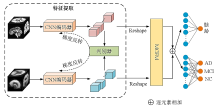
Fig. 1
Network framework diagram
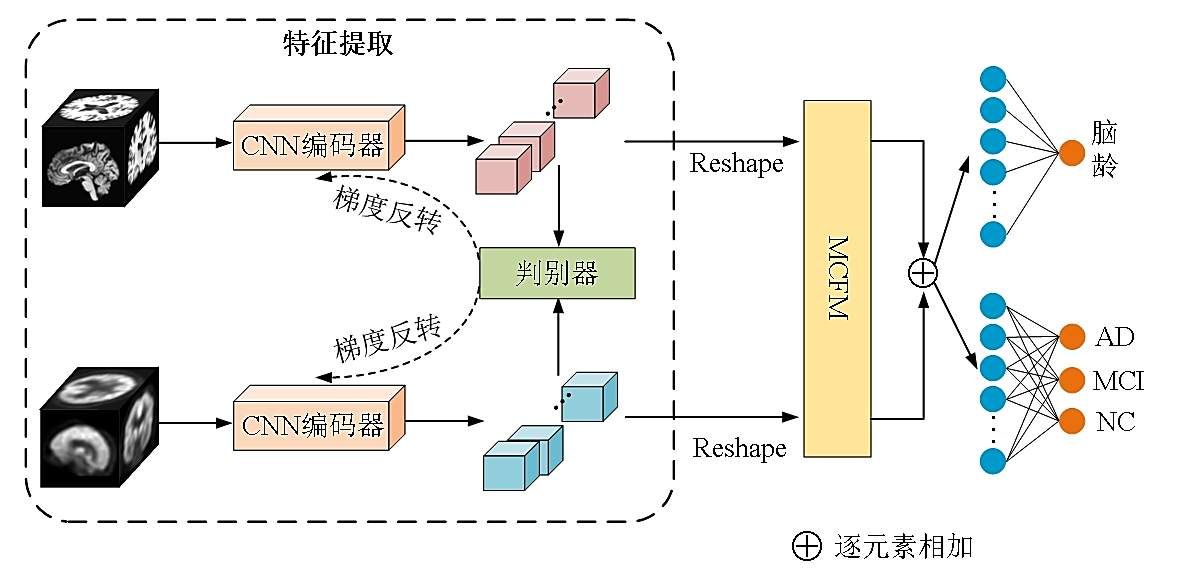
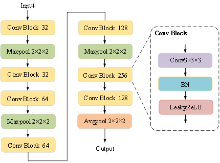
Fig. 2
CNN encoder
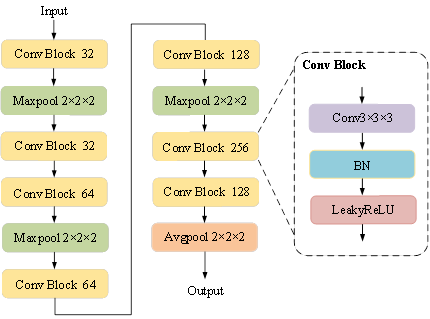

Fig. 3
Structure of MC
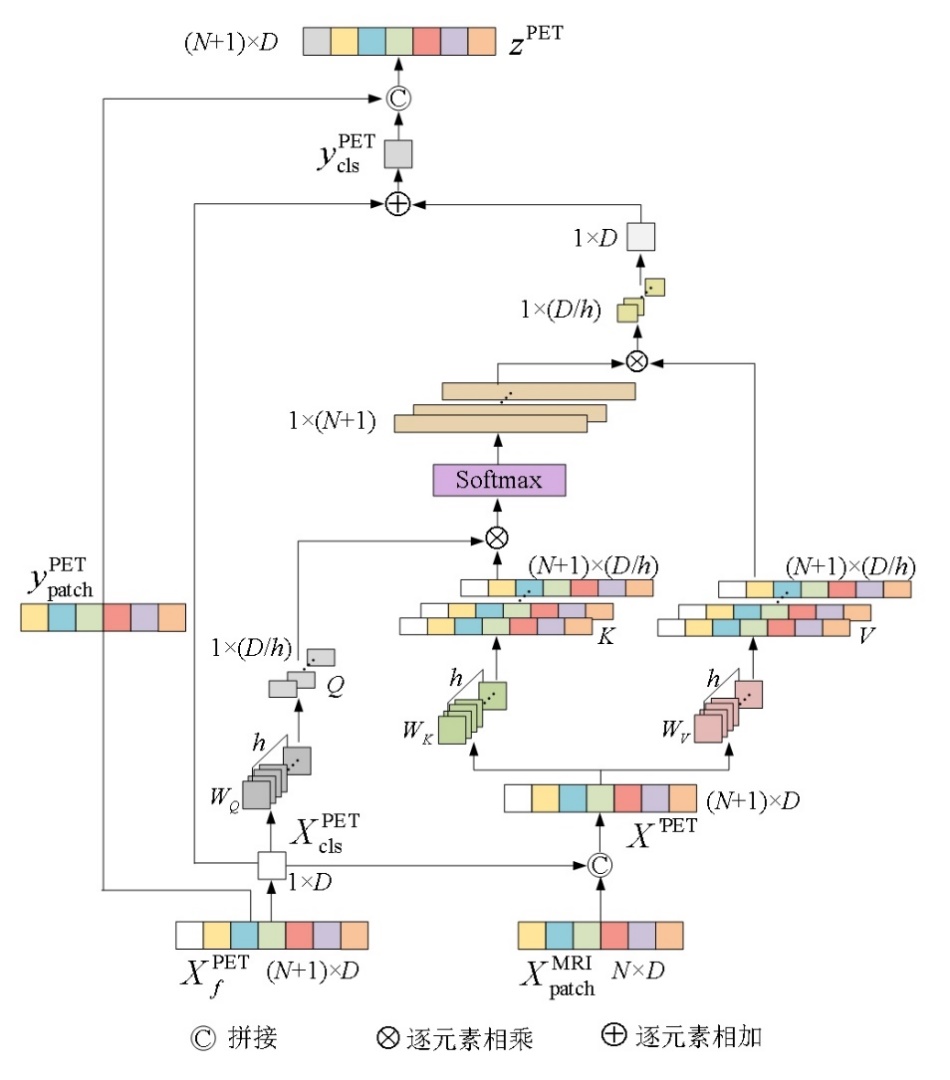

Table 1
Results of brain age prediction
| 分组 | 样本数量 | MAE |
|---|---|---|
| AD | 210 | 6.34 |
| MCI | 257 | 5.71 |
| NC | 267 | 3.52 |
Table 2
Ablation results of different modules
| 模态 | 组合 | ACC/(%) | F1/(%) | SEN/(%) | SPE/(%) | PRE/(%) | ||
|---|---|---|---|---|---|---|---|---|
| AL | MCFM | MT | ||||||
| MRI | 74.79(±1.46) | 72.38 | 73.39 | 87.38 | 75.31 | |||
| PET | 80.27(±2.65) | 78.27 | 78.77 | 88.62 | 82.41 | |||
| MRI+PET | 85.18(±2.59) | 83.15 | 83.60 | 91.61 | 83.16 | |||
| MRI+PET+age | √ | √ | 87.66(±2.48) | 87.66 | 88.09 | 93.14 | 87.61 | |
| MRI+PET+age | √ | √ | 90.00(±2.23) | 89.50 | 89.26 | 94.95 | 90.28 | |
| MRI+PET+age | √ | √ | 88.51(±2.45) | 87.04 | 87.80 | 93.44 | 89.99 | |
| MRI+PET+age | √ | √ | √ | 91.10(±1.79) | 91.01 | 90.53 | 95.53 | 90.90 |
Fig. 4
ROC curves of different modules (AD, MCI, and NC). (a) using MRI as the input to the CNN model; (b) using PET as the input to the CNN model; (c) using both MRI and PET as the inputs to the CNN model; (d) using both MRI, PET and age as the inputs to the ALMT model; (e) using both MRI, PET and age as the inputs to the ALMCFM model; (f) using both MRI, PET and age as the inputs to the MCFMMT model; (g) using both MRI, PET and age as the inputs to the MACNet model
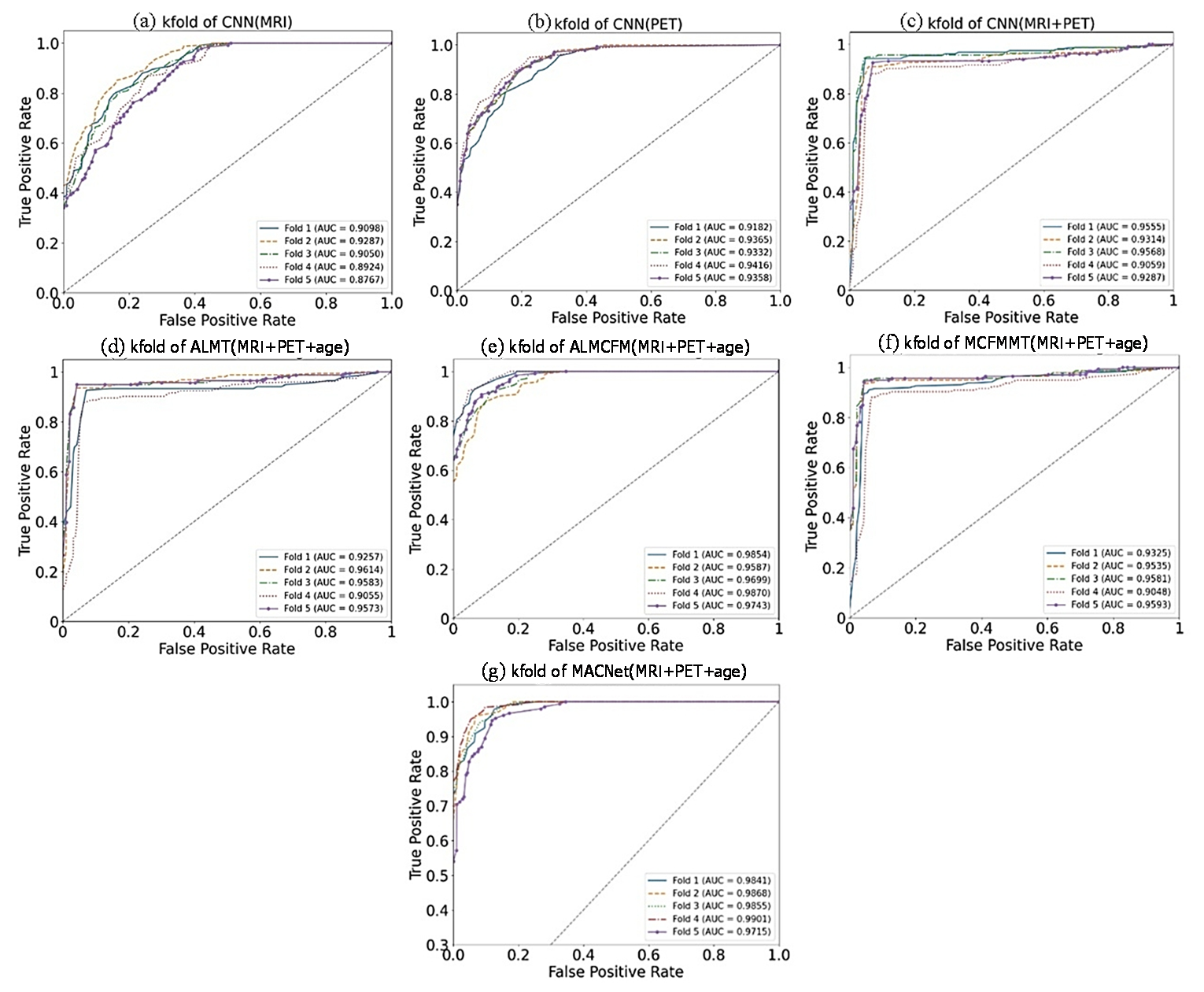
Fig. 5
Neural network heatmaps of AD and MCI
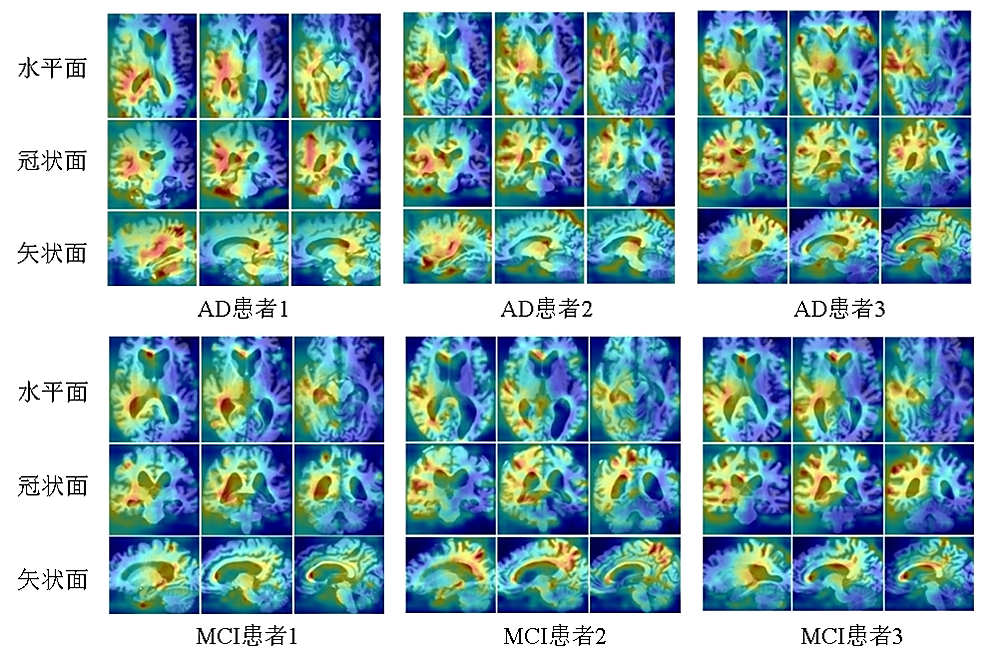
Table 3
Classification results of pMCI and sMCI
| 方法 | 模态 | ACC/(%) | F1/(%) | SEN/(%) | SPE/(%) | PRE/(%) | |
|---|---|---|---|---|---|---|---|
| MRI | PET | ||||||
| SACNet | √ | 70.30(±3.66) | 69.91 | 64.49 | 77.99 | 79.67 | |
| SACNet | √ | 73.33(±3.65) | 73.04 | 76.11 | 70.00 | 75.49 | |
| MACNet | √ | √ | 76.53(±2.85) | 76.36 | 85.00 | 67.33 | 75.82 |
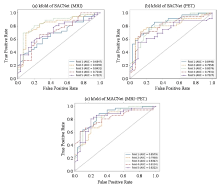
Fig. 6
Roc curves of different modules (pMCI and sMCI). (a) using MRI as the input to the SACNet model; (b) using PET as the input to the SACNet model; (c) using both MRI and PET as the inputs to the SACNet model

Table 4
Comparison results of experiments
| 模型 | ACC/(%) | F1/(%) | SEN/(%) | SPE/(%) | PRE/(%) |
|---|---|---|---|---|---|
| 3D VGG16 | 85.18(±2.59) | 83.15 | 83.60 | 91.61 | 83.16 |
| 3D ResNet34 | 86.30(±2.41) | 86.41 | 86.78 | 93.14 | 86.24 |
| 3D ViT | 76.71(±2.63) | 76.28 | 76.62 | 88.61 | 76.64 |
| MACNet (本文) | 91.10(±1.79) | 91.01 | 90.53 | 95.53 | 90.90 |
Table 5
Comparison of different research works
| 文献 | 图像类型 | 分类模型 | 类别 | 准确率/(%) |
|---|---|---|---|---|
| Huang等[ | MRI+PET | VGG | 1211例 | 90.10 |
| Song等[ | MRI+PET | 3D Simple CNN | 95 AD/160 MCI/126 NC | 74.54 |
| Zhang等[ | MRI+PET | PA-Net | 370例 | 89.90 |
| Abuhmed等[ | MRI+PET+神经心理学+神经病理学+认知评分 | BiLSTM+随机森林(多任务) | 1371例 | 84.95 |
| 本文 | MRI+PET+年龄 | MACNet | 210 AD/257 MCI/267 NC | 91.10 |
| [1] |
ANDERSON N D. State of the science on mild cognitive impairment (MCI)[J]. CNS Spectrums, 2019, 24(1): 78-87.
doi: 10.1017/S1092852918001347 pmid: 30651152 |
| [2] | CUMMINGS J, ZHOU Y, LEE G, et al. Alzheimer's disease drug development pipeline: 2023[J]. Alzh Dement-TRCI, 2023, 9(2): e12385. |
| [3] | BEACH T G, MONSELL S E, Phillips L E, et al. Accuracy of the clinical diagnosis of Alzheimer disease at National Institute on Aging Alzheimer Disease Centers, 2005-2010[J]. J Neuropathol Exp, 2012, 71(4): 266-273. |
| [4] | LIU H, JIN F, Zeng H, et al. Image enhancement guided object detection in visually degraded scenes[J]. IEEE T Neur Net Lear, 2024, 35(10): 14164-14177. |
| [5] |
KONG Z, ZHANG M, ZHU W, et al. Multi-modal data Alzheimer’s disease detection based on 3D convolution[J]. Biomed Signal Proces, 2022, 75: 103565.
doi: 10.1016/j.bspc.2022.103565 |
| [6] |
ZHANG F, LI Z, ZHANGH B, et al. Multi-modal deep learning model for auxiliary diagnosis of Alzheimer’s disease[J]. Neurocomputing, 2019, 361: 185-195.
doi: 10.1016/j.neucom.2019.04.093 |
| [7] |
MENG X, LIU J, FAN X, et al. Multi-modal neuroimaging neural network-based feature detection for diagnosis of Alzheimer’s disease[J]. Front Aging Neurosci, 2022, 14: 911220.
doi: 10.3389/fnagi.2022.911220 |
| [8] | KUN H A N, HAIWEI P A N, WEI Z, et al. Alzheimer's disease classification method based on multi-modal medical images[J]. J Tsinghua Univ (Sci Technol), 2020, 60(8): 664-671,682. |
| [9] |
SONG J, ZHENG J, LI P, et al. An effective multimodal image fusion method using MRI and PET for Alzheimer's disease diagnosis[J]. Front Digit Health, 2021, 3: 637386.
doi: 10.3389/fdgth.2021.637386 |
| [10] |
LOGAN R, WILLIAMS B G, FERREIRA DA SILVA M, et al. Deep convolutional neural networks with ensemble learning and generative adversarial networks for Alzheimer’s disease image data classification[J]. Front Aging Neurosci, 2021, 13: 720226.
doi: 10.3389/fnagi.2021.720226 |
| [11] | ZHANG Y X, WU X H, TANG L L, et al. Alzheimer's disease classification method based on multimodal data[J]. J Comput Appl, 2023, 43(S2): 298. |
| 张昀枭, 吴晓红, 唐荔莉, 等. 基于多模态数据的阿尔兹海默病分类方法[J]. 计算机应用, 2023, 43(S2): 298. | |
| [12] | GU J J, WANG Y J. Hybrid attention and multiscale module for Alzheimer's disease classification[J]. Chinese J Magn Reson, 2025, 42(2): 103-116. |
|
顾佳佳, 王远军. 混合注意力和多尺度模块的阿尔茨海默病分类方法[J]. 波谱学杂志, 2025, 42(2): 103-116.
doi: 10.11938/cjmr20243132 |
|
| [13] | VASWANI A, SHAZEER N, PARMAR N, et al. Attention is all you need[C]// Proceedings of the 31st International Conference on Neural Information Processing Systems, 2017: 6000-6010. |
| [14] | DOSOVITSKIY A, BEYER L, KOLESNIKOV A, et al. An image is worth 16x16 words: Transformers for image recognition at scale. arXiv (2021-06-03) [2025-05-30]. https://arxiv.org/abs/2010.11929. |
| [15] |
ZHU J, TAN Y, LIN R, et al. Efficient self-attention mechanism and structural distilling model for Alzheimer’s disease diagnosis[J]. Comput Biol Med, 2022, 147: 105737.
doi: 10.1016/j.compbiomed.2022.105737 |
| [16] | KUSHOL R, MASOUMZADEH A, HUO D, et al. Addformer: Alzheimer’s disease detection from structural mri using fusion transformer[C]// 2022 IEEE 19th I Symp Biomed Imaging (ISBI). IEEE, 2022: 1-5. |
| [17] |
KAUFMANN T, VAN DER MEER D, DOAN N T, et al. Common brain disorders are associated with heritable patterns of apparent aging of the brain[J]. Nat Neurosci, 2019, 22(10): 1617-1623.
doi: 10.1038/s41593-019-0471-7 pmid: 31551603 |
| [18] | SIMONYAN K, ZISSERMAN A. Very deep convolutional networks for large-scale image recognition[C]// International Conference on Learning Representations (ICLR). 2015: 1-14. |
| [19] | GOODFELLOW I, POUGET-ABADIE J, MIRZA M, et al. Generative adversarial nets[C]// Proceedings of the 28th International Conference on Neural Information Processing Systems, 2014, 2: 2672-2680. |
| [20] | CHEN C F R, FAN Q, PANDA R. Crossvit: Cross-attention multi-scale vision transformer for image classification[C]// 2021 IEEE/CVF International Conference on Computer Vision, Montreal, QC, Canada, 2021: 347-356. |
| [21] |
JACK JR C R, BERNSTEIN M A, FOX N C, et al. The Alzheimer's disease neuroimaging initiative (ADNI): MRI methods[J]. J Magn Reson Imaging, 2008, 27(4): 685-691.
doi: 10.1002/jmri.21049 pmid: 18302232 |
| [22] |
ESKILDSEN S F, COUPE P, GARCIA-LORENZO D, et al. Prediction of Alzheimer's disease in subjects with mild cognitive impairment from the ADNI cohort using patterns of cortical thinning[J]. NeuroImage, 2013, 65: 511-521.
doi: 10.1016/j.neuroimage.2012.09.058 pmid: 23036450 |
| [23] |
JENKINSON M, BECKMANe C F, BEHRENS T E J, et al. FSL[J]. NeuroImage, 2012, 62(2): 782-790.
doi: 10.1016/j.neuroimage.2011.09.015 pmid: 21979382 |
| [24] | SELVARAJU R R, COGSWELL M, DAS A, et al. Grad-cam: Visual explanations from deep networks via gradient-based localization[C]// 2017 IEEE International Conference on Computer Vision, Venice, Italy, 2017: 618-626. |
| [25] |
HUANG Y, XU J, ZHOU Y, et al. Diagnosis of Alzheimer’s disease via multi-modality 3D convolutional neural network[J]. Front Neurosci, 2019, 13: 509.
doi: 10.3389/fnins.2019.00509 |
| [26] |
ZHANG M, SUN L, KONG Z, et al. Pyramid-attentive GAN for multimodal brain image complementation in Alzheimer’s disease classification[J]. Biomed Signal Process Control, 2024, 89: 105652.
doi: 10.1016/j.bspc.2023.105652 |
| [27] |
ABUHMED T, El-SAPPAGH S, AlONSON J M. Robust hybrid deep learning models for Alzheimer’s progression detection[J]. Knowl-Based Syst, 2021, 213: 106688.
doi: 10.1016/j.knosys.2020.106688 |
| [1] | ZHAO Jing, BAO Qingjia, ZHANG Zhi, CHEN Gang, WU Zhaobo, HUANG Zhen, LIU Chaoyang. NMR Environmental Noise Suppression Method Based on Multi-channel Transformer Reconstruction [J]. Chinese Journal of Magnetic Resonance, 2026, 43(2): 115-124. |
| [2] | LI Xueting, LIANG Wei, ZHANG Xintong, CUI Mengqi, LIN Yulan. Resolving Crowded NMR Spectra Based on Longitudinal Multi-spin Order and Hadamard Encoding [J]. Chinese Journal of Magnetic Resonance, 2026, 43(2): 125-135. |
| [3] | WANG Jing, XIAO Yao, YU Xin, YI Xianfeng, ZHENG Anmin. Influence Mechanism of NH4F Etching on the Structure and Acidity of ZSM-5 Zeolite [J]. Chinese Journal of Magnetic Resonance, 2026, 43(2): 136-145. |
| [4] | LIU Jia, WANG Yingxiong, ZHAO Jiancheng. NMR Study of Tautomeric Distribution of Monosaccharides in Imidazolyl Ionic Liquids/DMSO-d6 [J]. Chinese Journal of Magnetic Resonance, 2026, 43(2): 146-163. |
| [5] | GAO Yuan, LIU Xinyue, WANG Sihong, HU Wei. Structure Elucidation of cis- and trans-1,2,4-Oxadiazol Derivatives [J]. Chinese Journal of Magnetic Resonance, 2026, 43(2): 164-174. |
| [6] | CAI Yue, WANG Xuxia, LIU Sijie, GUO Haodong, CHEN Xi, CHENG Linlin, KANG Yan, LIN Fuchun. Magnetic Resonance Imaging Study on the Microstructure Abnormalities of Striatal White Matter in Type 2 Diabetic Mellitus Rats [J]. Chinese Journal of Magnetic Resonance, 2026, 43(2): 175-185. |
| [7] | LI Ruiyi, LI Sha, XU Qiuyi, SUI Meiju, CHEN Shizhen. In Situ Regulation of Protein Corona for Enhanced Tumor-targeted 19F MRI and Combined Therapy [J]. Chinese Journal of Magnetic Resonance, 2026, 43(2): 200-213. |
| [8] | XIE Xinyi, WANG Yuanjun. Research Progress on Super-resolution Reconstruction of Brain Diffusion Magnetic Resonance Images [J]. Chinese Journal of Magnetic Resonance, 2026, 43(2): 223-240. |
| [9] | FU Fenfang, LIN Guobing, LI Meifang. Advances in Magnetic Resonance Imaging for the Diagnosis and Prognosis of Mild Traumatic Brain Injury [J]. Chinese Journal of Magnetic Resonance, 2026, 43(2): 214-222. |
| [10] | WU Zhaobo, WANG Jiaxin, LIU Wanzhen, CHENG Xin, WEI Wei, HUANG Zhen, CHEN Fang, ZHANG Zhi, LIU Chaoyang. Design and Development of Key Components for a Low-field Solid-state NMR Magic Angle Spinning (MAS) Probe [J]. Chinese Journal of Magnetic Resonance, 2026, 43(1): 1-15. |
| [11] | LIU Kangqi, LI Chenhong, QU Mingfei, WANG Pengfei, ZHAO Feng, KANG Songbai. Implementation of an Active Control System for Kerr Optical Soliton Frequency Comb Based on FPGA [J]. Chinese Journal of Magnetic Resonance, 2026, 43(1): 104-113. |
| [12] | LIU Ying, LU Zhihao, LV Hailong, ZHANG Haowei. A Design of CORDIC-based Magnetic Resonance RF Pulse Generator [J]. Chinese Journal of Magnetic Resonance, 2026, 43(1): 16-26. |
| [13] | HE Fengcheng, LI Mingdao, LV Xinglong, YAO Shouquan, JIANG Yu. Software Design of the Handheld NMR Spectrometer Console [J]. Chinese Journal of Magnetic Resonance, 2026, 43(1): 27-36. |
| [14] | ZHANG Guangqing, ZHAN Jianhua, XIAO Xiong, ZHU Qinjun, JIANG Bin, LIU Maili, ZHANG Xu. Investigating the Factors Influencing Oxidative Modification of Human Cytochrome c Using Girard's Reagent T as an NMR Probe [J]. Chinese Journal of Magnetic Resonance, 2026, 43(1): 37-45. |
| [15] | WANG Yiwen, WU Guangyao, WEN Zhi, LIN Fuchun. Antiretroviral Therapy-related Alteration of Brain Functional Dynamics in People with HIV [J]. Chinese Journal of Magnetic Resonance, 2026, 43(1): 61-70. |
| Viewed | ||||||
|
Full text |
|
|||||
|
Abstract |
|
|||||
